William Penn Quotes
I am very sensible of the unkindness and injustice that has been too much exercised towards you by the people of these parts of the world, who have sought themselves, and to make great advantages by you, rather than be examples of justice and goodness unto you; which I hear has been matter of trouble to you and caused great grudgings and animosities, sometimes to the shedding of blood, which has made the great god angry. But I am not such man as is well known in my own country. I have great love and regard toward you, and I desire to win and gain your love and friendship by a kind just, and peaceable life; and the people I send are of the same mind, and shall in all things behave themselves accordingly..
William Penn, 1644-1718, Founder of Pennsylvania, Letter to the Lenape Indian Nation, October 18, 1681
Sourced by: Eigen's Political and Historical Quotations

Not all Indians resented the coming of the white man. Several of the more peaceable tribes benefiting by interactions with the United States and some even sought affiliation—especially the military weaker tribes which would be protected by an alliance with the Americans.


The Iroquois had a very successful confederacy of 6 tribes in a relatively democratic government with a written constitution. They dominated the Eastern part of North America for years. The were able to maintain a permanent unity with a unified and decentralized combination of government—much like the United States would become. At the time of this advice, each American colony was a government unto itself. The three Iroquois Indian delegates were Canassatego, Tachanoontia, and Gachradodow.

This quotation is interesting in that the Madison Administration was being very careful to not alienate the Indians in Federal land purchases. Although there are many who believe the whites never should have enticed Indians to sell land at all, there were many cases where the land sales were fraudulent and gross—The Cherokee Indians in Georgia. At this time, the Federal government would negotiate an amount for some land and pay the Indian tribe the agreed upon sum. Then another tribe might claim that the land was really theirs, they had also been hunting or living there. In some cases there were Indian wars and one tribe had banished another. Madison’s policy which he reported in this speech was to negotiate with BOTH tribes separately and pay them each the agreed upon amount—he tells the public that it is worth paying double to avoid bad feelings among the Indians. Jefferson and Madison in particular had relatively liberal Indian policies. It was President Jackson who had the worst Indian policy and produced a large proportion of immoral actions, atrocities and subsequent bad feeling.


The intentions of the Founding Fathers towards the Indians was decent, respectful, and well intentioned. However, there was not enough of a system of enforcement or the will to enforce when the greed of the average whites grew too great. Many settlers saw these vast lands and could not see any harm in using a few acres for their farm. And if there had been only a few, there would have been little trouble. However, the settlers kept coming and coming and soon the Indians began to push back. In a sense, it was a class problem. The members of the Continental Congress who wrote the Northwest Ordinance were educated, affluent men who had plenty of land. Most of the men who contested for the Indian lands had little land or were newly affluent and saw few limits to America.

Many American leaders wanted to comply with and enforce the Indian treaties, but the remoteness made it difficult. There were always those whites who did not want to be restricted by Indian treaties who took advantage of the situation when there was a leader like Clinton who wanted to enforce the treaties. However in many cases, the American leadership really did not want to enforce the treaties and in some cases, as with President Andrew Jackson, wanted to abrogate the treaties with the Indians.


This is an excellent example of the twisted, self-fulfilling logic of the Afrikaners in justifying apartheid. Many Afrikaners were inveterate racists, and were also usually armed which was a rural tradition of their early immigration and the Zulu and Boer Wars. Those whites would cause a riot if a black was allowed into a white audience performance. That in turn would cause chaos. Therefore mixed audiences could not be allowed. It never occurred to Botha and his colleagues that the government’s responsibility was to control and restrict the white rioters and instigators. This was not unique Afrikaner thinking; the same logic prevailed throughout the American South in the Jim Crowe segregation era.


Jefferson probably had the most enlightened policy towards the Native Americans and did not see them as a people apart from Americans. His phrase “we consider them as part of ourselves” would not be concurred with by another American President for over 100 years. Unfortunately, there were many American whites who did not have Jefferson’s view, and there was no practical way the Federal Government at the time could enforce benign and equality policies. Relations with most Indian tribes went down hill and may have reached the lowest point under the Administration of Andrew Jackson.


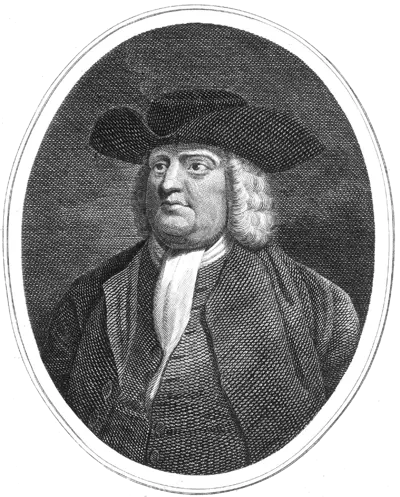
William Penn was an English writer and religious thinker belonging to the Religious Society of Friends (Quakers), and founder of the Province of Pennsylvania, a North American colony of England. He was an early advocate of democracy and religious freedom, notable for his good relations and successful treaties with the Lenape Native Americans. Under his direction, the city of Philadelphia was planned and developed. Philadelphia was planned out to be grid-like with its streets and be very easy to navigate, unlike London where Penn was from. The streets are named with numbers and tree names. He chose to use the names of trees for the cross streets because Pennsylvania means "Penn's Woods".
