Benjamin Franklin Quotes
If an Indian injures me, does it follow that I may avenge myself on all other Indians?
Benjamin Franklin, 1706-1790, Member of the Continental Congress & the Constitutional Convention, Governor of Pennsylvania, President of the Pennsylvania Assembly, U.S. Minister to France, Postmaster General of the American Colonies, Statement defusing the Paxton Boys mob who were attacking Indians indiscriminately
Sourced by: Eigen's Political and Historical Quotations

This was one of Jackson’s official major justifications for his controversial Indian Removal policy. The logic was that since there had been some Indian raids on whites with whites being killed, the whites had a right to retaliate and a good way of doing that was by taking their land and removing them to lands far away. He saw a Christian virtue to the policy as they whites did not raid and kill the Indians. The “logic” such as it was, of course, ignored the fact that there had been white raids and massacres of Indians as well, but in both cases, they were done by a small minority of the Indians and Whites, Jackson’s view was that all Indians should be held responsible for the act of some violent Native Americans. However Jackson had used this guilt generalization before and even used the term “retaliatory vengeance” when he vowed revenge on the British for his treatment as a Prisoner of War in the American Revolution — See Quotation 621975.


After the FBI had been spying on him for years. He was convicted of mail fraud for allegedly defrauding one man of $25. He spend 2 years in Federal prison and then was pardoned by President Calvin Coolidge. When he was released, he was deported.


This proverb only makes sense in the light of understanding the Arab concept of revenge—“blood.” In a rural desert environment where little can be expected of government, the Arabs have developed a law enforcement and peace keeping mechanism which while primitive from modern standards, nevertheless worked to some degree. It is that revenge—“blood” is a moral necessity and obligation of all people, and revenge is not limited by time or to the individuals involved in the first incidence. The immediate family are the first to exact revenge, but the extended family follows and often the entire clan. Sometimes revenge is tribal or even national. Anyone who fails to revenge a member in his group is not only a disgrace, but is a clear and present danger to the group because then they can be attacked with impunity. So revenge is a strong obligation of the group members and blood must be paid with blood no matter how many generations it may take. The only thing that keeps me and my family safe, is the surety what whosoever kills one of us will themselves be killed or if they die a natural death we will take revenge on one of the evildoers relatives and no one is exempt. Crime must never pay!


The defendants included the County Sheriff, a deputy, and the Imperial Wizard of the Mississippi KKK who had ordered the murders. Cox, an inveterate racist (See {637614}.), gave the two men convicted of 1st degree murder, including the Klan leader, to only 10 years, and the 2nd degree murderers were only sentenced to 3-5 years as the trial was Federal for Civil Rights violations but the judge did not even impose the maximum jail sentence.


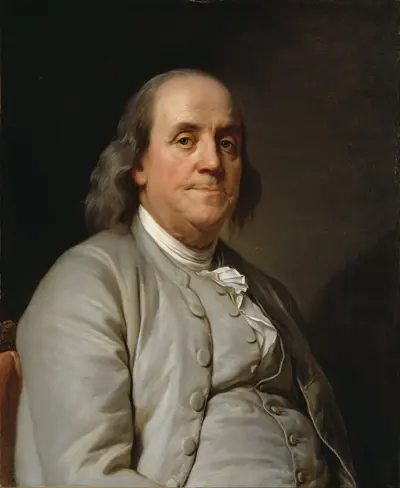
Benjamin Franklin FRS FRSA FRSE was one of the Founding Fathers of the United States. A polymath, he was a leading writer, printer, political philosopher, politician, Freemason, postmaster, scientist, inventor, humorist, civic activist, statesman, and diplomat. As a scientist, he was a major figure in the American Enlightenment and the history of physics for his discoveries and theories regarding electricity. As an inventor, he is known for the lightning rod, bifocals, and the Franklin stove, among other inventions. He founded many civic organizations, including the Library Company, Philadelphia's first fire department, and the University of Pennsylvania.
