C. P. Scott Quotes
I am strongly of the opinion that the war ought not to have taken place and that we ought not to have become parties to it, but once in it the whole future of our nation is at stake and we have no choice but do the utmost we can to secure success.
Like many Americans who thought it bad policy to go to war in Iraq in the early 21st century and then became ardent military supporters to win the war rather than lose, Scott maintained that victory in WWI was crucial even though he had opposed entry into the war.
Charles Prestwich Scott, 1846-1932, British Member of Parliament, Editor of the Manchester Guardian, Letter to Manchester and Salford Trades and Labour Council, August, 1914
Sourced by: Eigen's Political and Historical Quotations


The phrase was picked up by the press, and then became the title to a patriotic song of World War II.


The report was from Heinrich von Tschirschky, the German ambassador to Austria-Hungary. He recommended that Germany persuade Austria-Hungary to not attack Serbia, not realizing the German leaders had already planned a war with Russia and saw the issues between the Austro-Hungarian Empire and Serbia was a good excuse to implement their war plans (see {642092}).


Unlike many socialists who were pacifists and against WWI, Foster and the communists were supporters of the war against fascist Germany, This was one of the reasons that Nazi Germany was virulently anti-communist later.


War and international conflict had become very complicated in modern times. Americans and most other people associated victory in war with unconditional surrender. However, since the unconditional surrender is of WWII, no conflict has ended with an unconditional surrender.


He allowed one of his statements to appear on the Democratic Party radio response to the President’s weekly broadcast.


Adams is quoting from Cato, a play by Joseph Addison.


This would be like an American President firing the congressional chaplains. However this is only one small, but telling, example of Atatuk’s secularization of the nation which had a great deal to do with Turkey becoming a modern great power—by far the strongest and most developed of the Islamic world.
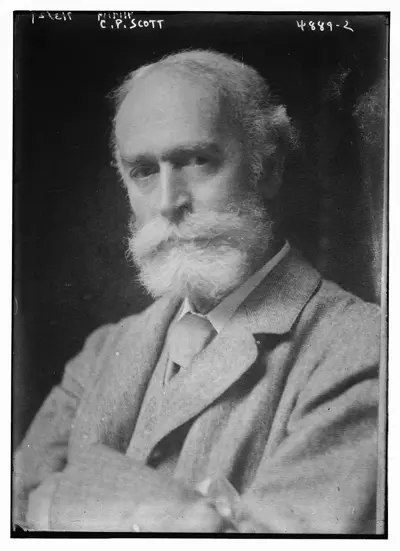
Charles Prestwich Scott, usually cited as C. P. Scott, was a British journalist, publisher and politician. Born in Bath, Somerset, he was the editor of the Manchester Guardian (now the Guardian) from 1872 until 1929 and its owner from 1907 until his death. He was also a Liberal Member of Parliament and pursued a progressive liberal agenda in the pages of the newspaper.
