Napoleon Bonaparte Quotes
My policy is victory.
Napoleon Bonaparte Bonaparte, 1769-1821, [Napoleon Bonaparte], Military leader and Emperor of France, Quoted on The History Channel, Pawn Stars, June 8, 2014
Sourced by: Eigen's Political and Historical Quotations


The General refused. He had already achieved a strategic victory and it was only a matter of time when the Dutch would withdraw on their own as their supply lines were cut off and the populations wanted them out.


See Prince Otto von Bismarck-Schoenhausen {632620} for a similar focus on "iron and blood". This is no coincidence as Lindemann had been the Captain of the Battleship Bismarck.

Barry Goldwater in the 20th century used a variation of this quotation. See {601784}.


A variant of this quotation was used by Admiral of the German Navy. See {609658}.
China had a similar policy with each side wanting to establish more of a precedent for its ownership of the islands. Military flyovers, landing parties raising national flags by both countries triggered counter measures and the likelihood of casualties and even death to some soldiers. Both sides seemed willing to risk the lives of their troops as long as the conflict could be contained thereafter. But sometimes it cannot be.


In this case, he was referring to the situation with the Barbary Pirates who had an incredible extortion racket going in the Mediterranean. If nations would pay them an annual sum each year, they would not attack and seize merchant ships of that country and sell the ships and goods while holding the sailors for ransom. Jefferson favored and authorized war—a naval attack which for many reasons the European nations had not done (they just paid the tribute). Then a peace treaty was finally signed—the first American Treaty.

For various historical reasons the United States and Iran at that time had no diplomatic relations and there was no easy way for the countries to negotiate their differences. The United States public policy was that Iran would not be allowed to develop a nuclear weapon which was backed up by severe economic sanctions and the threat of military force. Kucinich wanted face to face negotiations and discussions before we resorted to military action.
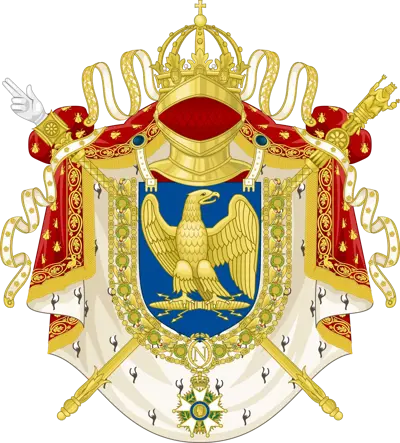
Napoléon Bonaparte was a French military and political leader of Corsican descent. He rose to prominence during the French Revolution and led several successful campaigns during the Revolutionary Wars. As Napoleon I, he was Emperor of the French from 1804 until 1814, and again in 1815. Napoleon dominated European and global affairs for more than a decade while leading France against a series of coalitions in the Napoleonic Wars. He won most of these wars and the vast majority of his battles, building a large empire that ruled over continental Europe before its final collapse in 1815. One of the greatest commanders in history, his wars and campaigns are studied at military schools worldwide. He remains one of the most celebrated and controversial political figures in human history.
