Benjamin Franklin Quotes
I agree to this Constitution with all its faults, if they are such;… I doubt too whether any other Convention we can obtain may be able to make a better Constitution….It therefore astonishes me, Sir, to find this system approaching so near to perfection as it does; and I think it will astonish our enemies, who are waiting with confidence to hear that our councils are confounded like those of the Builders of Babel; and that our States are on the point of separation, only to meet hereafter for the purpose of cutting one another's throats. Thus I consent, Sir, to this Constitution because I expect no better, and because I am not sure, that it is not the best.
He was too ill to read the speech himself and it was read by James Wilson for him.
Benjamin Franklin, 1706-1790, Governor of Pennsylvania, Member of the Continental Congress & the Constitutional Convention, Governor of Pennsylvania, President of the Pennsylvania Assembly, U.S. Minister to France, Postmaster General of the American Colonies, Speech assenting to the new Federal Constitution, Philadelphia, September 17, 1787
Sourced by: Eigen's Political and Historical Quotations

Dix finally broke with the Democrats over the slavery question and became a Republican.

Franklin wrote the speech, but was too old and ill to deliver it personally. James Wilson of Pennsylvania did the honors for him.


Jackson was reacting to the claimed right of South Carolina to nullify Federal tariffs and other Federal laws.


The political battles over the ratification of the Constitution were vicious and brutal even by modern standards.


See {613416} for the clause that the Southerners found so offensive.


This hypocrisy and insincerity was seen for what it was by the Radical Republicans, Abolitionists and the newly freed slaves themselves. See {617728} and {617339}. However, this approach soon was adopted as the “party line” by intellectual Southerners of the time, and has continued to this day. The rebellion that caused the deaths of more Americans than all the rest of our wars, was not as they stated it caused by any conflict over slavery, no economic causes, no differences in labor philosophies and trade, no contention over control of new territories, but was simply an attempt to vigorously support and defend the Constitution. However, one advantage to using this story as an explanation of the bloody rebellion, was that the defeated Southerners could see their acts as somewhat nobly motivated.
Conason was refuting the argument of Presidential Press Secretary Ari Fleischer {618120} who had used the secrecy of the Constitutional Convention in 1789 to justify the Vice President’s secret meetings with energy businessman to make government energy policy.

George W. Bush. See {618119} for the rejoinder to the defense.


Arguing for ratification of the proposed Constitution, Madison explained to those who thought the Federal Government would have new, powerful taxing authority. Madison explains that the existing Continental Congress could require the same degree of taxation even if the Constitution were not ratified. Another important aspect of this quotation is that the argument was clear that Federal taxation was to be used not only for the “common defense” but equally for the “general welfare.” There are those who believe that the only legitimate Federal taxes authorized by the Constitution are for defense and the military. However, the “general welfare” benefit was very clear, and that is how it has been.


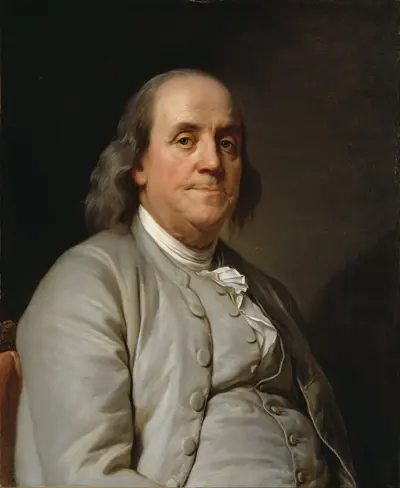
Benjamin Franklin FRS FRSA FRSE was one of the Founding Fathers of the United States. A polymath, he was a leading writer, printer, political philosopher, politician, Freemason, postmaster, scientist, inventor, humorist, civic activist, statesman, and diplomat. As a scientist, he was a major figure in the American Enlightenment and the history of physics for his discoveries and theories regarding electricity. As an inventor, he is known for the lightning rod, bifocals, and the Franklin stove, among other inventions. He founded many civic organizations, including the Library Company, Philadelphia's first fire department, and the University of Pennsylvania.
