Richard Stengel Quotes
Compromise created the Constitution.
Richard Stengel, President, National Constitution Center, C-SPAN, March 4, 2005
Sourced by: Eigen's Political and Historical Quotations


In the 1787 Constitutional Convention in Philadelphia, the delegates agreed that the there would be no official transcript and that the debates were to be kept secret:

Conason was refuting the argument of Presidential Press Secretary Ari Fleischer {618120} who had used the secrecy of the Constitutional Convention in 1789 to justify the Vice President’s secret meetings with energy businessman to make government energy policy.

George W. Bush. See {618119} for the rejoinder to the defense.


Most of the states would not ratify the proposed 1787 constitution as it was. Congress then added a version of what became known as the Bill of Rights in order to obtain the required concurrence of the people. Most scholars look at the 1787 Constitution and observe how little trust it had in the men who would rule and implement it. However, the people in general were even more skeptical than the intellectual leaders who drafted the Constitution and wanted even more assurances. Many people believed that most of the issues in the Bill of Rights were either implicit in the original 1787 draft or were unnecessary to spell out, but Congress had to sell the Constitution to the people as a whole and it took some very specific text to get people to believe that their rights would be protected.


It was commonly asked of Blacks applying to register. There are few people who could give a cogent response to this. What made it terrible was that the white racist registrars had the unilateral authority to determine whether or not the oral response was adequate. Recording of responses were prohibited so that no Black who was disenfranchised could ever appeal when he/she was rejected. This is one of the thousands of techniques that were used throughout the South to prevent Negro voting. They were so egregious that Lyndon Johnson was abe to force through Southern filibusters The Voting Rights Act which has eliminated the worst of the racist restrictions on Black voting. As the worst of the racist white generation has died off, Southern discrimination in voting has lessened and the situation is better each year. By 2012 there were some who claimed that the law was no longer necessary do to changes in attitude and practice, but others worried that if there were no longer any forms of discrimination in voting, why some wanted to repeal the Voting Rights Act.
The political battles over the ratification of the Constitution were vicious and brutal even by modern standards.


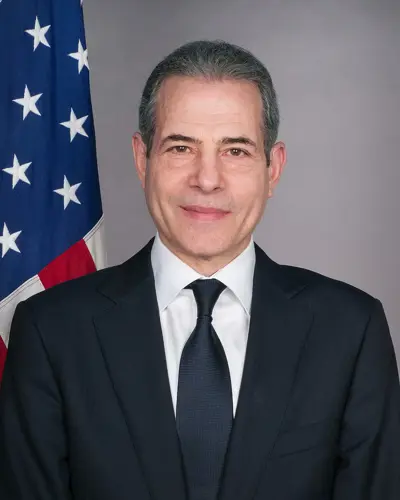
Richard Allen Stengel is an American editor, author, and former government official. He was Time magazine's 16th managing editor from 2006 to 2013. He was also chief executive of the National Constitution Center from 2004 to 2006, and served as President Obama's Under Secretary of State for Public Diplomacy and Public Affairs from 2014 to 2016. Stengel has written a number of books, including a collaboration with Nelson Mandela on Mandela's autobiography, Long Walk to Freedom. Stengel is an on-air analyst at MSNBC, a strategic advisor at Snap Inc., and a Distinguished Fellow at the Atlantic Council. His 2019 book, Information Wars: How we Lost the Battle Against Disinformation and What to Do About It, recounts his time in the State Department countering Russian disinformation and ISIS propaganda.
