Michael Crichton Quotes
Having wallowed in a delightful orgy of anti-French sentiment, having deplored and applauded the villains themselves, having relished the foibles of bankers, railwaymen, diplomats, and police, the public was now ready to see its faith restored in the basic soundness of banks, railroads, government, and police.
Crichton, Michael. The Great Train Robbery. Knopf, 1975.

We live in a time where people are losing confidence in the ability of Government to solve problems.
The public confidence in government had hit an historical low during the administration of George W. Bush during which his administration was riddled with ideologues who had little competence and less inclination to solve problems. However even in those cases where the Bush administration wanted to succeed, they usually failed producing such fiascos as Hurricane Katrina, the aftermath of the invasion of Iraq, shipping nuclear weapons components my mistake to Taiwan, illegal disclosure of the identity of CIA covert agents, and others.


Gates believed that ideally the government would have the trust of the people to access critical data, but that at the moment there are many who do not trust the government. Unfortunately, the FBI on many occasions have themselves broken the law and targeted people who had political and social viewpoints of which the FBI leadership did not approve. The CIA has on many occasions violated the law and repeatedly lied to Congress and even Presidents. The National Security Agency has also, in its zeal to carry out its mission skirted the law and the Director of National Intelligence blatantly deceived Congress and was exposed by the Snowden releases. Gates was an optimist and thought that the government could regain the necessary trust to allow it to have access to virtually all data in order to best protect society from things like terrorism with biological weapons.

There have been tides of public trust that ebb and flow in almost every decade.


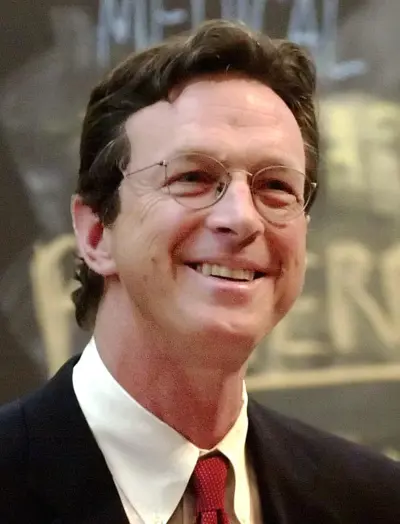
John Michael Crichton was an American author and filmmaker. His books have sold over 200 million copies worldwide, and over a dozen have been adapted into films. His literary works are usually within the science fiction, techno-thriller, and medical fiction genres, and heavily feature technology. His novels often explore technology and failures of human interaction with it, especially resulting in catastrophes with biotechnology. Many of his novels have medical or scientific underpinnings, reflecting his medical training and scientific background.
