David Brooks Quotes
You have a country that is 20 percent liberal, 40 percent conservative. You have a country where maybe 22 percent have faith in government. If you're a liberal, it's just going to be tough. And you should just expect that. And it's tough for people on the right, too, because they don't get what they want either if you're, say, a libertarian. So, you have got the country sort of against you. And, nevertheless, you have a president.
Brooks, David. PBS NewsHour, MacNeil/Lehrer Productions.


A minority of newly elected ultra conservative Tea Party Republicans intimidated most of the main line Republicans by threatening to run against them in their primary elections. The result was that almost no legislation was passed and there was a constant drumbeat of attacks against anything the government was doing or might do in the future. Public confidence in government was driven very low, with only the public confidence in Congress lower. The Democrats who could accomplish very little in that circumstance became very unpopular while the Republicans were even more so. However, many Tea Party Republicans viewed that as a victory as their major objective is to enfeeble government—especially the Federal government.

We live in a time where people are losing confidence in the ability of Government to solve problems.
The public confidence in government had hit an historical low during the administration of George W. Bush during which his administration was riddled with ideologues who had little competence and less inclination to solve problems. However even in those cases where the Bush administration wanted to succeed, they usually failed producing such fiascos as Hurricane Katrina, the aftermath of the invasion of Iraq, shipping nuclear weapons components my mistake to Taiwan, illegal disclosure of the identity of CIA covert agents, and others.

At the time the Republican party was a minor, third party and Douglas was disparaging that. While Douglas' general point has held true, the Republicans supplanted the Whigs as the second major party shortly thereafter.


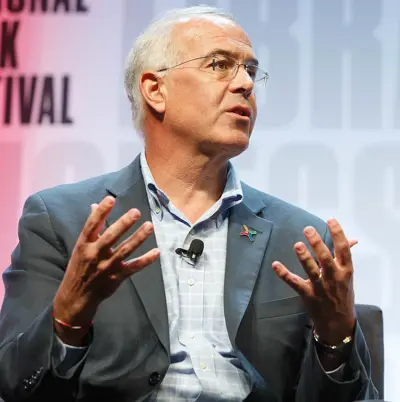
David Brooks is a conservative political and cultural commentator who writes for The New York Times. He has worked as a film critic for The Washington Times, a reporter and later op-ed editor for The Wall Street Journal, a senior editor at The Weekly Standard from its inception, a contributing editor at Newsweek, and The Atlantic Monthly, and a commentator on NPR and the PBS NewsHour.
