John Hay Quotes
… half-baked, glib, little briefless jackleg lawyer … begging for the Presidency, as a tramp might beg for a pie.
The two insulting adjectives are used very rarely these days, but they were in common use at the turn of the end of the 19th century. “Briefless” when applied to a lawyer connoted little intellectual substance, as the important facets of a case are usually in an attorney’s briefs. “Jackleg” described a unprofessional, shoddy person with no standards of excellence. Eg. A person who made do with a temporary jack to hold up a large piece of furniture rather than a proper leg. These were very insulting terms at the time.
John Milton Hay, 1838-1905, U.S. Ambassador to Great Britain, U. S. Secretary of State (Republican), Assistant and Secretary to the President [Abraham Lincoln], Description of William Jennings Bryan the Democratic Candidate running against McKinley
Sourced by: Eigen's Political and Historical Quotations


This quotation illustrates an interesting phenomenon in American Presidential Politics. There have been Democratic Presidents (FDR and Obama are the most glaring examples) for whom there was vituperative hatred and derision from the conservative Republicans who would frequently refer to them as Socialists and would believe that they were trying to lead the country on the path to socialism. The Presidents always stated that they were opposed to socialism, but to little avail with their conservative haters. But the socialists of the times and even the left wing of the Democratic Party not only did not see them as socialists, but were not very supportive or complementary of their skills and capabilities. Roosevelt reveled in the situation and “welcomed: their hate. Obama was more of a public centrist who tried to avoid the president getting involved in the extreme partisanship of the day.

Richard M. Nixon was, even before the Watergate scandal very disliked as both a politician and a person. However, this was one of the first major public figures who castigated Nixon, the man, in a major public address. Many followed, In this collection there are many more insults to Richard M. Nixon than any other politican.


Kennedy’s pro Nazi and pro Hitler stance and statements when Ambassador to England, destroyed him politically in the United States. However, we transferred his political ambition to his sons, and JFK became the first Catholic President of the United States.


In many recent Presidential elections many have thought a Vice Presidential candidate superior to the Presidential candidate. Such was also the case in 1900.

Patton always believed that Eisenhower wanted to be President. At the beginning of the war Patton was much senior to Eisenhower, but President Roosevelt promoted Eisenhower above many more senior generals. Eisenhower thought Patton the best fighting general in the army, but a public relations and administrative problem. Several times when he had gone too far, Eisenhower reprimanded him but kept him in his command position. After the fighting was over, Patton became the military governor of part of Germany and was not as successful at peacekeeping and nation building as he was at fighting. Eisenhower was convinced that Patton would destroy himself and get fired by the army command and the President if he continued as governor. Patton confused Eisenhower’s prudent and politic demeanor with the allies as a lack of courage. And Patton could never get over the fact that Eisenhower and never commanded an army fighting in the field. He was jumped to Supreme Allied Commander, in a very bold and brilliant stroke by FDR who passed over many senior generals.


They never met. Harrison lost to Barkley by a single vote. Harrison’s fellow Senator from Mississippi was Theodore Bilbo, 1877-1947, a notorious racist and demagogue and Harrison would have nothing to do with Bilbo. However, in 1937 Harrison was a candidate for the Senate Majority Leader and appeared tied with Alben Barkley. Bilbo sent word to Harrison that if he would meet with him, Bilbo would vote for Harrison.


Bryant, like most New Englanders did not trust Jefferson and saw anything the President did in its worst possible light. He even believed that Jefferson’s great interest in science was evidence of his lack of respect for religion. Nothing he could do was right, much like the Tea Party and President Barack Obama more than 200 years later.

The candidates had remarkably little experience in foreign affairs with the exception of Jon Huntsman and Newt Gingrich who in the extreme right wing ideology driving the Republican primary voters at the time had little chance of winning as they were too far to the left for the Republicans of the time.


Although his primary occupation was as a political columnist, he was also a physician and psychiatrist. The desire and ambition for so much power is not typical of most people and the willingness to pay the personal cost to try and attain that position tends to take all Presidential candidates out of the Normal range of American citizens.

Ruth did have a great year. Hoover was floundering after presiding over the stock market crash and the Great Depression that followed.


In Iowa they have a caucus primary system, which is very foreign to most politicians.

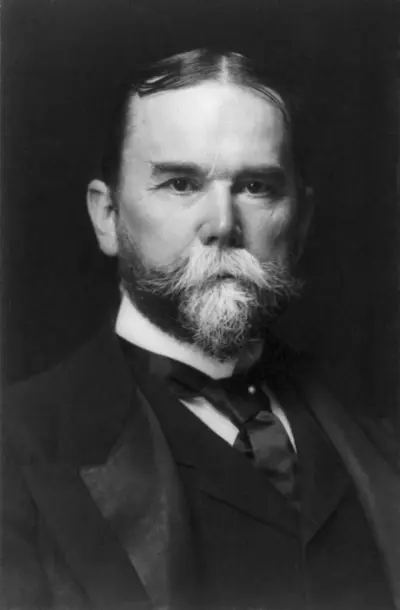
John Milton Hay was an American statesman and official whose career in government stretched over almost half a century. Beginning as a private secretary and assistant to Abraham Lincoln, Hay's highest office was United States Secretary of State under Presidents William McKinley and Theodore Roosevelt. Hay was also an author and biographer, and wrote poetry and other literature throughout much of his life.
