Thomas Carlyle Quotes
Every government is the exact symbol of its people ... Like People like Government.
Thomas Carlyle, 1795-1881, Scottish essayist and historian, Member of Parliament, Past and Present, 1843
Sourced by: Eigen's Political and Historical Quotations


_0_thumbnail_47x47.jpg "Statue of Robert Hall in Leicester.")
For many people the implication of this quotation is that there should be no government secrets withheld from the citizens who have the right to examine. Others argue that government may have temporary secrets to protect against foreign enemies for example, but that these must be declassified very promptly so that the citizens can examine the actions of their government in time to replace the government if they are not satisfied. Almost all government officials tend to reject the first implication out of hand, and grudgingly accept the second with their discretion controlling when declassification should take place. The problem of America is twofold. There is much over-classification (material kept secret that should not be at all), and the time till declassification is long in general and truly absurd in many cases. For example, there are documents from WWII that by 2013 had still not been declassified. See {591444}, {641317}, and {589105} for exemplar views. William Jennings Bryan introduced this principle into the American political dialogue. See {641027}.

See Edmund Burke and Franklin Delano Roosevelt for a similar view.

This quotation had a close proximity to Lincoln’s Gettysburg Address (see linked quote). Although this was probably Lincoln's most famous line, it was not totally original. John Adams came close in a 1774 proclamation (see linked quote). As did John Marshall in his McCulloch v. Maryland decision (see linked quote). There was also Thomas Cooper in 1795 (see linked quote). But the earliest close phrase use appears to be the English cleric, John Wycliffe, in 1382 (see linked quote). It is not known with which of these Lincoln was familiar.


There is a certain redundancy in that “Fenian” means “Party.”

There was a belief among some anti-Federalists that the people lost their power by electing representatives and not having a direct democracy as in many New England communities. Ames gave the counter argument.

Note the similarity to Lincoln who Ataturk very much admired.


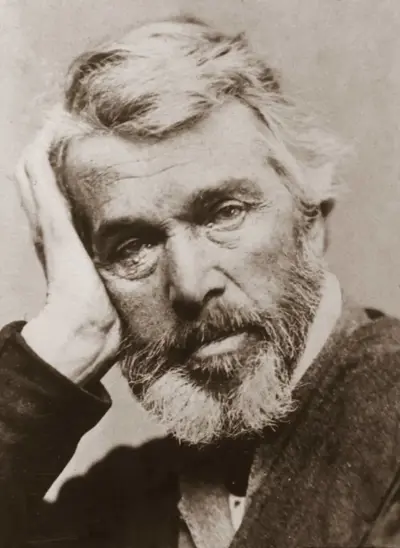
Thomas Carlyle was a Scottish historian, satirical writer, essayist, translator, philosopher, mathematician, and teacher. In his book On Heroes, Hero-Worship, and The Heroic in History (1841), he argued that the actions of the "Great Man" play a key role in history, claiming that "the history of the world is but the biography of great men". Other major works include The French Revolution: A History, 3 vols (1837) and The History of Friedrich II of Prussia, Called Frederick the Great, 6 vols (1858–65).
