Mona Charen Quotes
Drug money, such as booze money during Prohibition, has corrupted countless police, Drug Enforcement Administration agents, border patrol agents, prosecutors and judges... Because illegal drugs are unregulated, their purity is unknowable -- accounting for thousands of overdose deaths and injuries... Let's stipulate that some unknown number of Americans will become addicts after legalization, who otherwise would not have. We must ask whether the terrible price we are now paying -- in police costs, international drug control efforts, border security, foregone tax revenue, overdose deaths, corruption and violence -- is worth it.
Mona Charen, Speech Writer for VP Candidate Jack Kemp, Political Columnist, Quoted on Marijuana Majority Website, January 28, 2014
Sourced by: Eigen's Political and Historical Quotations


The main feature of this law was to establish a very small tax on opiates. The tax was not significant as a revenue source, but was meant to make public that which had been a clandestine activity and also reduce the promotion of sales. Users had to fill out special Treasury Department forms to order their drugs, and none could be delivered to anyone who did not order on the special forms.


British merchants and the East India Company made huge profits from the drug trade buying opium in India and selling it to China where it had become immensely popular. But when the Chinese (led by Lin Zexu) tried to ban the import of opium, the British fought two wars with China to force the reopening of the opium trade. At the end of the 20th century, some referred to England and the English Crown as the largest Drug Cartel in history.
Cixi had issued a 10 point edict designed to end opium use in China. One of its most interesting elements was that it only applied to Chinese under the age of 60. She recognized that for those elderly people who are thoroughly addicted to opium, prohibition would be to radical a change and their life expectancy was not very long. At the time, the average lifespan of Chinese was under 50.


He was the first Chinese official to make opium illegal. However, British many merchants were involved in a complicated trade scheme whereby they brought opium to Canton. They paid not attention to the new laws against opium the same as their Chinese customers. Lin Zexu, perceiving Queen Victoria to have powers equivalent to the Chinese Emperor who could do anything in China, He assumed that the Queen could and would control the merchant’s behavior, and before punishing the British merchants, he was putting the Queen on notice. There is no record of what Victoria did, if anything. When Lin Zexu tried to enforce his ban on opium, the British Merchants resisted and the First Opium War broke out between China and Britainin which the Chinese were humiliated and resent to this day. A bronze statue of Lin Zexu was erected in his honor in Chatham Square (Kimlau Square) of New York City's Chinatown.


The "Formula" was to legalize all drugs, This would break the Drug Cartels and the power they held in Mexico, The money that could be saved from the failing drug law enforcement could be spsent on substance abuse prevention and treatment. He also felt that government should not intude on personal life style and health decisions. He was particularly intent on legalizing marijuana which unlike alcohol and other illicit drugs does not cause death.
There are great differences in the law enforcement policies throughout the country. Even when marijuana was illegal in every state, there were gret differences in the vigor with which this illegality was enforced. And local cities, towns and counties also are different. In the case of Pueblo marijuana was illegal in his childhood but the local authorities chose not to enforce those laws. Even within the same city or town there are often differential enforcement policies for different neighborhoods very ften. Also some communities have a strong libertarian viewpoint and there has been a reluctance to enforce lws relating to personal life choices.


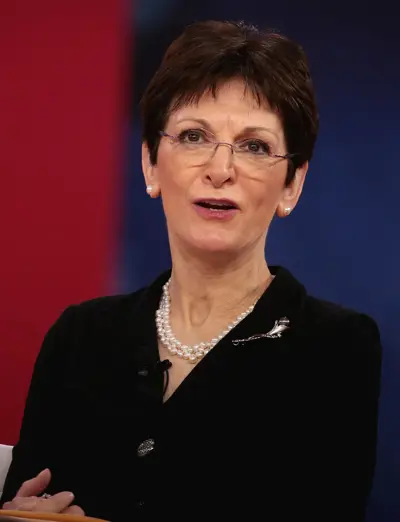
Mona Charen Parker is a columnist, journalist, political commentator, and writer in the United States. She has written three books: Useful Idiots: How Liberals Got it Wrong in the Cold War and Still Blame America First (2003), Do-Gooders: How Liberals Hurt Those They Claim to Help (and the Rest of Us) (2005), both New York Times bestsellers, and Sex Matters: How Modern Feminism Lost Touch with Science, Love, and Common Sense (2018). She was also a weekly panelist on CNN's Capital Gang until it was canceled. A political conservative, she often writes about foreign policy, terrorism, politics, poverty, family structure, public morality, and culture. She is also known for her generally pro-Israel views.
