Milton Friedman Quotes
I'm in favor of legalizing drugs. According to my value system, if people want to kill themselves, they have every right to do so. Most of the harm that comes from drugs is because they are illegal
Milton Friedman, 1912-2006, 1912-2006, Nobel Laureate in Economics, 1986
Sourced by: Eigen's Political and Historical Quotations


British merchants and the East India Company made huge profits from the drug trade buying opium in India and selling it to China where it had become immensely popular. But when the Chinese (led by Lin Zexu) tried to ban the import of opium, the British fought two wars with China to force the reopening of the opium trade. At the end of the 20th century, some referred to England and the English Crown as the largest Drug Cartel in history.

Cixi had issued a 10 point edict designed to end opium use in China. One of its most interesting elements was that it only applied to Chinese under the age of 60. She recognized that for those elderly people who are thoroughly addicted to opium, prohibition would be to radical a change and their life expectancy was not very long. At the time, the average lifespan of Chinese was under 50.

This was a great surprise to most conservatives who assumed that Robertson, a major conservative leader and ordained minister would be opposed to drug legalization.


That was certainly true at that time in the United States. Marijuana was illegal, but alcohol and nicotine—cigarettes—were legal. Yet, over 350,000 deaths a year were caused by nicotine, over 100,000 alcohol related death the epidemiologists had found. But the number of marijuana caused death was just a handful, although there were hunreds of deaths of drug dealers fighting for territory, Nicotine an alcohol science had proved was addicting. Not so for marijuana which for some people was habituating, but marijuana never met the scientific criteria for addiction.


Marijuana was and still is a health and social problem in that people who tend to use it---especially young people---tend not to focus on their friendships, their work and study obligations, their own development and welfare. However it is nowhere near the degree of deleterious problems of alcohol and other drugs like heroin, cocaine, and methamphetamine. There is no record of anyone dying from an over dose or marijuana while alcohol and other drugs kill hundreds if not thousands a year. But none of those health emergencies compare with the flu which each year kills over 20,000 Americans who do not get inoculations or highway crashes which kill about 50,000. Yet Nixon did not characterize these as “national emergencies.”


He was the first Chinese official to make opium illegal. However, British many merchants were involved in a complicated trade scheme whereby they brought opium to Canton. They paid not attention to the new laws against opium the same as their Chinese customers. Lin Zexu, perceiving Queen Victoria to have powers equivalent to the Chinese Emperor who could do anything in China, He assumed that the Queen could and would control the merchant’s behavior, and before punishing the British merchants, he was putting the Queen on notice. There is no record of what Victoria did, if anything. When Lin Zexu tried to enforce his ban on opium, the British Merchants resisted and the First Opium War broke out between China and Britainin which the Chinese were humiliated and resent to this day. A bronze statue of Lin Zexu was erected in his honor in Chatham Square (Kimlau Square) of New York City's Chinatown.

Friedman was an advocate for the legalization of illicit drugs, claiming that the harm that is done by making drugs illegal is greater than that which would occur if drugs were legalized. He also observed that alcohol kills times the number of Americans than does illegal drugs and tobacco kills four times as many as alcohol.
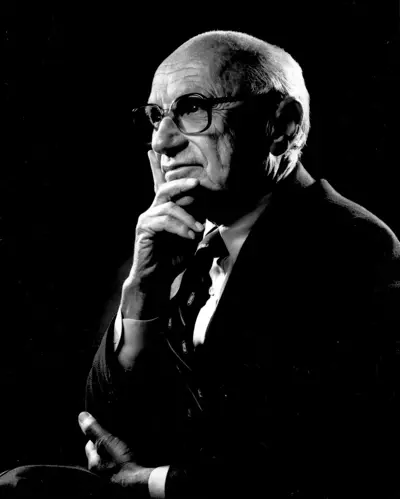
Milton Friedman was an American economist and statistician who received the 1976 Nobel Memorial Prize in Economic Sciences for his research on consumption analysis, monetary history and theory and the complexity of stabilization policy. With George Stigler and others, Friedman was among the intellectual leaders of the Chicago school of economics, a neoclassical school of economic thought associated with the work of the faculty at the University of Chicago that rejected Keynesianism in favor of monetarism until the mid-1970s, when it turned to new classical macroeconomics heavily based on the concept of rational expectations. Several students and young professors who were recruited or mentored by Friedman at Chicago went on to become leading economists, including Gary Becker, Robert Fogel, Thomas Sowell and Robert Lucas Jr.
