Carlos Fuentes Quotes
The consumption of drugs could be legalized, not penalized.
Carlos Fuentes, 1928-2012, Mexican Writer and Politician, Interview, The Charlie Rose Show, February 21, 2011
Sourced by: Eigen's Political and Historical Quotations


That was certainly true at that time in the United States. Marijuana was illegal, but alcohol and nicotine—cigarettes—were legal. Yet, over 350,000 deaths a year were caused by nicotine, over 100,000 alcohol related death the epidemiologists had found. But the number of marijuana caused death was just a handful, although there were hunreds of deaths of drug dealers fighting for territory, Nicotine an alcohol science had proved was addicting. Not so for marijuana which for some people was habituating, but marijuana never met the scientific criteria for addiction.


The main feature of this law was to establish a very small tax on opiates. The tax was not significant as a revenue source, but was meant to make public that which had been a clandestine activity and also reduce the promotion of sales. Users had to fill out special Treasury Department forms to order their drugs, and none could be delivered to anyone who did not order on the special forms.


Cixi had issued a 10 point edict designed to end opium use in China. One of its most interesting elements was that it only applied to Chinese under the age of 60. She recognized that for those elderly people who are thoroughly addicted to opium, prohibition would be to radical a change and their life expectancy was not very long. At the time, the average lifespan of Chinese was under 50.


British merchants and the East India Company made huge profits from the drug trade buying opium in India and selling it to China where it had become immensely popular. But when the Chinese (led by Lin Zexu) tried to ban the import of opium, the British fought two wars with China to force the reopening of the opium trade. At the end of the 20th century, some referred to England and the English Crown as the largest Drug Cartel in history.

This was a great surprise to most conservatives who assumed that Robertson, a major conservative leader and ordained minister would be opposed to drug legalization.

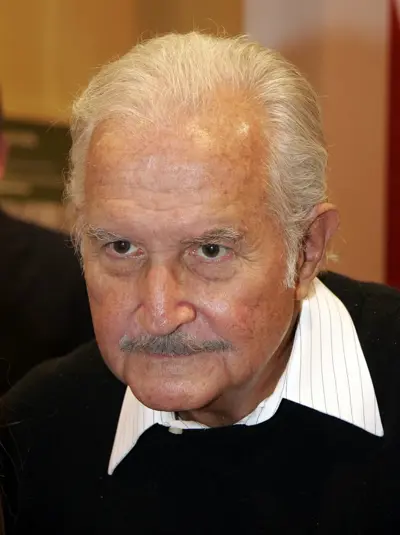
Carlos Fuentes Macías was a Mexican novelist and essayist. Among his works are The Death of Artemio Cruz (1962), Aura (1962), Terra Nostra (1975), The Old Gringo (1985) and Christopher Unborn (1987). In his obituary, The New York Times described Fuentes as "one of the most admired writers in the Spanish-speaking world" and an important influence on the Latin American Boom, the "explosion of Latin American literature in the 1960s and '70s", while The Guardian called him "Mexico's most celebrated novelist". His many literary honors include the Miguel de Cervantes Prize as well as Mexico's highest award, the Belisario Domínguez Medal of Honor (1999). He was often named as a likely candidate for the Nobel Prize in Literature, though he never won.
