George Washington Quotes
Discipline is the soul of an army. It makes small numbers formidable; procures success to the weak, and esteem to all.
Washington, George. "Orders to the Captains of the Virginia Regiment, 29 July 1757." The Papers of George Washington, Colonial Series, vol. 4, edited by W. W. Abbot, University Press of Virginia, 1984, p. 345.


In Pakistan, the civilian governments were not in control of the army who would have their own polices, foreign and domestic. When the head of the Army assumed the Presidency in a coup, he approached the Prime Minister of India—the Pakistan traditional enemy—and assured him that unlike with the civilian governments, he could negotiate for the country. Ironically, Prime Minister Manmohan Singh disclosed this quotation after Pervez Musharraf was deposed and democracy and civilian government returned to Pakistan. However the Indian Prime Minister then complained that there was no one to negotiate with as the civilian elected prime minister could not speak for the army—still the major power in Pakistan.


At the height of the Watergate scandal, the president wanted special prosecutor Archibald Cox fired, because Cox was developing evidence against the president. The attorney general, Elliot Richardson, refused to fire Cox and resigned. The chief of staff then turned to the deputy attorney general, William Ruckelshaus, who also refused and resigned. Finally, the Solicitor General, next in line of authority, agreed to fire the special prosecutor. These events happened on a Saturday night and became known as the “Saturday Night Massacre”. This event persuaded most Americans that Nixon was guilty of felonies and was desperately trying to cover things up. Congress would include “obstruction of justice” in it’s list of crimes that they would have impeached Nixon for had he not resigned.


This is an amazing speech which illustrated the best of the development and growth of Islam. Note that: The ruler who has just been given ALL secular AND religious power admits candidly that he may not be the best qualified. This would not happen for over another 1000 years and even today is very rare in any society. In addition, he invites the citizens to correct him when he is wrong. Later, Calihs would, like the Christian kings and popes claim infallibiity and kill any who suggested otherwise. And daring to correct the ruler was capital offence for most of history and is even dangerous in some Muslim countries today. Last and perhaps most amazing, the new Caliph called for an affirmative leveling of the inequality of rights and power and announces it asa one of his major responsiblities. It is this kind of vision so unheard of at the time which shows us why so many flocked to Islam at the time. From a fairness, human rights, and accoutabiity of the ruler point of view Islam was the most modern of the religions then. Tragically, other forces shaped Islam for the next 1500 years and most Muslim countries become the least modern and its rulers are least accountable to the citizenry with none of the other rights and concept of fairness that Abu Bakr and other early Islamic leaders brought.
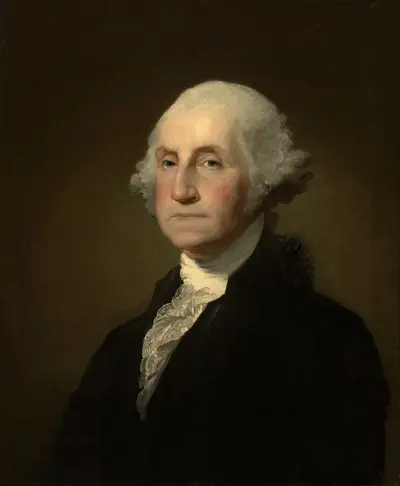
George Washington was the first President of the United States (1789-97), the Commander-in-Chief of the Continental Army during the American Revolutionary War, and one of the Founding Fathers of the United States. He presided over the convention that drafted the current United States Constitution and during his lifetime was called the "father of his country".
