Clark M. Clifford Quotes
[Describing the executive branch:] ... a chameleon taking its color from the character and personality of the President.
Clark M. Clifford, 1906-1998, Presidential assistant, U. S. Secretary of Defense (Democrat), "The Presidency As I Have Seen It," in Emmet Hughes, The Living Presidency, 1973
Sourced by: Eigen's Political and Historical Quotations
_0_PostageStamp_47x47.jpg "Chairman of the Joint Chiefs of Staff Navy Adm. Mike Mullen gives an interview to John Dickerson during the CBS news program Face the Nation in Washington, D.C., July 5, 2009. During the interview, Mullen discussed the wars in Iraq and Afghanistan, North Korea's recent missile tests and his recent visit to Russia. (DoD photo by Mass Communication Specialist 1st Class Chad J. McNeeley, U.S. Navy/Released)")


Alberto Gonzalez, White House Counsel and later Attorney General who was forced to resign and David S. Addington, Counsel to the Vice President, had come up with a novel view of the powers of the presidency. They argued that since the President is the Commander in Chief, in a war situation or intelligence gathering thereto, has the Constitutional responsibility for that function, he need not obey any laws of Congress as in the conduct of the war Congress would be impinging on the Constitutional separation of powers which itself was prohibited by the Constitution. The argument did not find any significant legal support but for a while the George W. Bush White House behaved as if this were the law, despite the fact that even in the American Revolution and the War of 1812 Congress passed laws regulating the conduct of the armed forces as is provided for in other parts of the Constitution. Yet even Goldsmith would allow the President some powers that many think are unconstitutional and/or belong to Congress. See {32436}.

Also attributed to John F. Kennedy and Lyndon B. Johnson


Before Theodore Roosevelt, American Presidential Candidates had to pretend that they did not seek the presidency and remain passive. However Roosevelt changed that norm and the primary elections, taking the nomination away from a few party leaders, further required Presidential aspirants to campaign. The principle Lomdes articulated was that if called upon, one was obligated to serve, but should not overtly seek the position and wait to be called by the people.


He was Chief of Staff and was trying to calm the nation. However, he created a real problem. By saying he was in control, he alarmed many people as the Constitution did not give him any authority to be in control of anything. Many people saw this as a sign of his extreme personal ambition. Others, that he had just made a mistake.


That is one view—the one tried the most frequently by Presidents who by their own estimates didn’t get a responsive civil service working to his priorities. Presidents like Teddy Roosevelt, Franklin Roosevelt, and Dwight Eisenhower and Lyndon Johnson had great cooperation from their civil servants; they instead appointed very competent people with strong senses of fairness and leading personnel. Ronald Regan tried both techniques. He used Wilson’s technique in his Education and Justice Department where there was slow-rolling and dissonance when his appointees tended to be ideologues with little or no outstanding professional competence in the fields they supervised. However, his military and State Department bureaucracies was very responsive to his appointees who were excellent leaders.


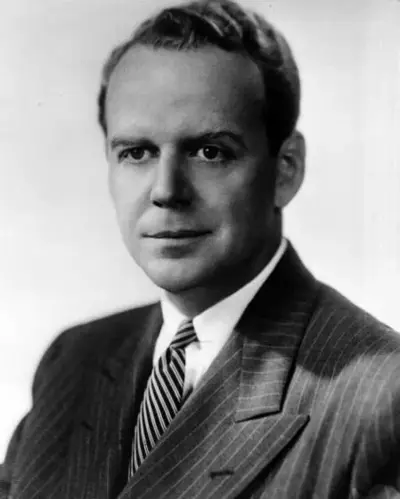
Clark McAdams Clifford was an American lawyer who served as an important political adviser to Democratic presidents Harry S. Truman, John F. Kennedy, Lyndon B. Johnson, and Jimmy Carter. His official government positions were White House Counsel (1946–1950), Chairman of the President's Intelligence Advisory Board (1963–1968), and Secretary of Defense (1968–1969); Clifford was also influential in his role as an unofficial, informal presidential adviser in various issues. A successful Washington lawyer, he was known for his elite clientele, charming manners, and impeccable suits.
