Andrew Jackson Quotes
Control would be exercised by a few over the political conduct of the many by first acquiring that control over the labor and earnings of the great body of people.
Opposing the concept of a national or central bank:
Andrew Jackson, 1767-1845, 7th President of the United States (Democrat, TN), Quoted in William Greider, Secrets of the Temple, Simon & Schuster, 1987
Sourced by: Eigen's Political and Historical Quotations


This is one of the FDR quotations, which his opponents then, and many conservatives later, characterized as “class warfare.” This type of accusation has in part protected business leaders and those who control wealth from public accountability. Similar business leader resentment was levied against President Obama when he criticized the Bankers and Wall Street leaders whose behavior, in great part, was the cause of the economic meltdown and recession of 2008.

Salisbury was a brilliant, effective prime minister, but he was a snob and not a democrat. See {639131}.


In May of 1886 police had killed some strikers for an 8 hour work day at the McCormick Plant in Chicago. A left wing newspaper called a rally using the word “revenge.” (See {43614}.) The next day, at the rally, someone threw a dynamite bomb killing several police who in turn wounded and killed many of the protestors. 31 people were indicted for the “Haymarket Bombing,” 8 were tried, and 7 were convicted and sentenced to death including Spies. There was however, no evidence linking any of the defendants with the bombing, only evidence linking them with left wing, anarchist positions and writings.


In his economic view, managers, accountants, attorneys, owners, shareholders, landlords, were all supported by the workers who have to support themselves and all the others.


Tolstoy saw this as a much more general phenomenon than classic cases where the English dominated India. He not only included ethnic minorities (like the Chinese who dominate the economy of the Philippines or the Shiite-Sunni dominance battles in the Middle East, but he included a classic business situation where the minority (the wealthy owners and bosses) dominate and control the majority (the workers).


She was one of the first prominent white southerners to denounce racial segregation.

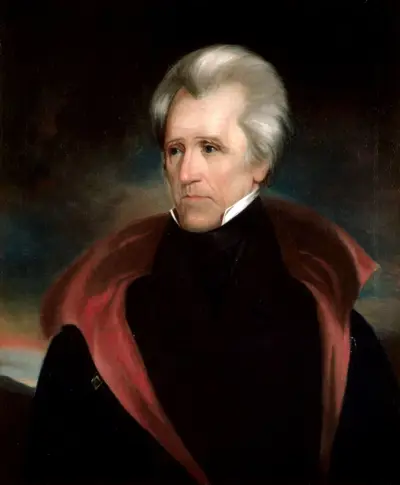
Andrew Jackson was an American lawyer, soldier, and statesman who served as the seventh president of the United States from 1829 to 1837. Before being elected to the presidency, Jackson gained fame as a general in the United States Army and served in both houses of the U.S. Congress. An expansionist president, Jackson sought to advance the rights of the "common man" against a "corrupt aristocracy" and to preserve the Union.
