Warren G. Harding Quotes
Before I was elected President I thought the chief pleasure of it would be to give honors and offices to old friends. But you know you can't do that when you're President of the United States; you have to get the best men.
Warren G. Harding, 1865-1923, 29th President of the United States (Republican, OH), Quoted in The Washington Evening Star, January 7, 1921
Sourced by: Eigen's Political and Historical Quotations


He had asked Acheson to be Secretary of State and Acheson told the President that he did not feel qualified to do the job. Acheson then accepted.


Note that early constitutional experts assumed that one of the President’s roles was to be non partisan and control partisanship. Note the phrase ‘prevent the artifices of party’. The early founders were very wary of political parties of ‘factions’ as Madison called them. However, most were extremely partisan although in the Presidency partisanship was toned down by George Washington but after him, partisan ship became the norm.


President Andrew Johnson was one of the worst Presidents America has elected. He was a tailor and became governor of Tennessee before he ascended to the Presidency on the assassination of Abraham Lincoln.


2nd Viscount Melbourne. The pressure for appointments to key positions has always been a problem in modern America. What is surprising in this quotation is that the exact same problems existed in a constitutional monarchy in 19th century England. Note the formality of the form of address in letters to the Queen. Lamb refers to himself in the third person by his aristocratic title, “Lord Melboure”, rather than the first person “I” which would have been too familiar in the address of the monarch. Many English communications with the King or Queen, even in modern times, is this archaic form of address.


2nd Baronet Peel. He was then the Chief Secretary of Ireland and only 26 years of age. Patronage jobs, cronyism, and corruption was then extreme in Irish politics.
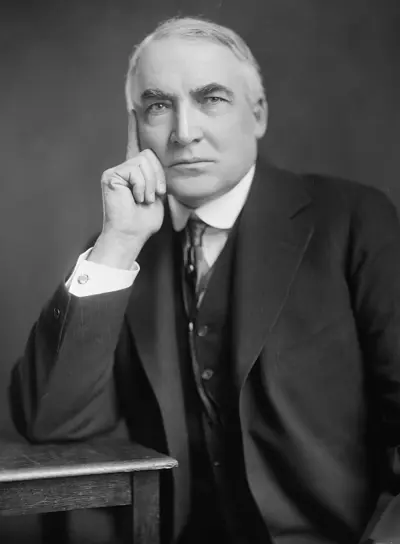
Warren Gamaliel Harding was the 29th president of the United States, serving from 1921 until his death in 1923. A member of the Republican Party, he was one of the most popular U.S. presidents to that point. After his death, a number of scandals, including Teapot Dome, came to light, as did his extramarital affair with Nan Britton; those eroded his popular regard.
