Wilhelm II, German Emperor Quotes
Be as terrible as the Hun.
The Hun were a very fierce, Asian people who under Attila, defeated the troops of the Roman Empire and sacked several Italian cities. They fought very intensely and terrorized their enemies. The Kaiser came under great criticism from other European powers from urging his soldiers to emulate vicious barbarians with no sense of Christian morality.
Wilhelm II, 1859-1941, Emperor of Germany & King of Prussia, Order to his troops, 1900
Sourced by: Eigen's Political and Historical Quotations

Description of the tactic of terrorism as employed by Attila the Hun. This is one of the first articulate descriptions of the motivation of terror tactics.


Yuliy Osipovich Martov. Criticism of the Bolshevik behavior in dealing with counter-revolutionaries in the civil war that followed the Russian Revolution. This despite the fact that the death penalty had been abolished right after the Revolution. See {590510}

He arrived in 1527, 7 years before De Soto and in a 6,000 mile ordeal, was the first white to cross the explore the interior of the continent. He was describing the Spanish slavers behavior with respect to the Indians of the New World.


The U.S. was at war with Spain and Filipino insurgents for the control of the Philippines. During this war there were a few senior U. S. Officers who in later times would have been tried and jailed for war crimes. The men under them were brutal and committed atrocities at their orders. See {615368}.
He controlled a Shiite political party with its own armed militia.

This was part of the continual conflict between the Muslims and the Eastern Orthodox Christians. The Greeks ended up doubling their territory.


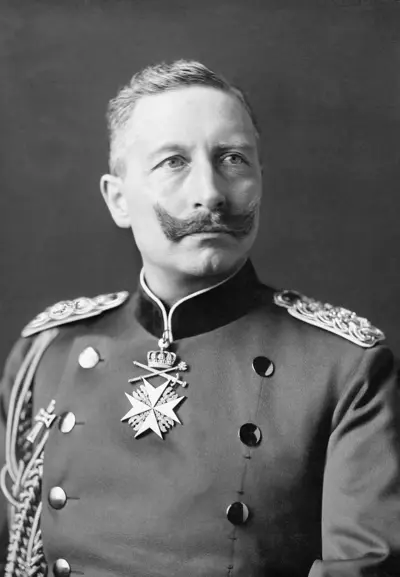
Wilhelm II, anglicised as William II, was the last German Emperor (Kaiser) and King of Prussia, reigning from 15 June 1888 until his abdication on 9 November 1918. Despite strengthening Germany's position as a great power by building a blue-water navy and promoting scientific innovation, his tactless public statements greatly antagonized the international community and his foreign policy was seen by many as one of the causes for the outbreak of World War I. When the German war effort collapsed after a series of crushing defeats on the Western Front in 1918, he was forced to abdicate, thereby bringing an end to the three-hundred-year rule of the House of Hohenzollern.
