Andrew Sullivan Quotes
Any president can start a war, and use the chaos of disorder that such a war creates as an indefinite argument for prolonging it. It's a war that keeps on giving. Failure means it's even more necessary to keep failing.
Andrew Sullivan, Editor of The New Republic & Political Commentator, "Of Their Choosing", The Daily Dish, September 20, 2007
Sourced by: Eigen's Political and Historical Quotations


In 1963 there was only one Congressman who expressed misgivings about United States military involvement in Vietnam:


President George W. Bush initiated an invasion of Iraq based on the fact that Iraq was developing nuclear, chemical and biological weapons. After the invasion however, there were none of these weapons found and much evidence that there were not any at that point in time. By the time Congress, the body which is supposed to declare war, found out that the reason for the war was bogus, it was too late. We had already occupied the country and were in the midst of a civil war. The President either acted on bad intelligence or wanted to invade Iraq for other reasons and history may finally tell us which, but Fein sees the problem as too much secrecy in the executive branch.


the modern believe is that democracies are not prone to war, especially against other democracies. Seward, and some others believe that democracies can be pushed into war by politicians you do so for partisan political advantage. Politicians often have to show how tough they are.


This was not always so. But even in WWII America and its allies were willing to inflict such terrible damage on teh infrastructure and civillians required if the last vestiges of the military are to be destryoed or rendered incapabley of ressurecting themselves. Since then we have not been willint to pay that price, nor the price of losing lives of our own military. As a result, fanatics who can recruit additional fanatics who are willing to die for a cause con continue the firght almost perpetually.
Some others at the time did not see the different theaters of fighting as separate, but observed one commonality of almost all the violent conflict in the world—–Islamic, fundamentalist, extremism. Hence they viewed it as a world war with a singular enemy. Wars rarely ended at the time because most world opinion was against the Draconian degree of destruction and suffering for a people to be so broken that they will not consider fighting again. Cease fires allow the partied to regroup and ready themselves to continue their struggle.

The “surge” was the short term injection of a large number of American combat troops into Iraq when the Iraq War was going badly. President George W. Bush, who at the urging of Vice President Cheney and the neoconservatives had invaded Iraq and while the invasion went well the administration botched the so-called peace and America was in the midst of a Iraqi civil war. Bush went ahead with the surge despite the advice of the Joint Chiefs. What makes the quotation particularly interesting, beyond the fact that the senior military advice was ignored, was that the President had always campaigned on the principle that the President should listen to the senior American Military officials on military tactics and strategy. He like Franklin Roosevelt, Harry Truman, Dwight Eisenhower, John F. Kennedy, and other presidents found that the military leadership perspective was often very narrow and not even militarily infallible. The Iraq War turned in our favor after the surge albeit that there have been arguments since then as to whether or not the surge was the reason or was it due to other factors which occurred at the same time. Probably, all were factors.

WWII has been remembered as a “good war” which had the overwhelming support of American at the time and in historical retrospect.


He was arguing that normal Constitutional limitations should not apply to the President in wartime.
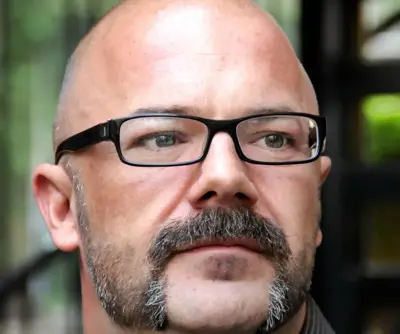
Andrew Michael Sullivan is a British-American author, editor, and blogger. Sullivan is a political commentator, a former editor of The New Republic, and the author or editor of six books. He started a political blog, The Daily Dish, in 2000, and eventually moved his blog to platforms, including Time, The Atlantic, The Daily Beast, and finally an independent subscription-based format. He announced his retirement from blogging in 2015. From 2016 to 2020, Sullivan was a writer-at-large at New York. His newsletter The Weekly Dish was launched in July 2020.
