Arthur Capper Quotes
An interesting agricultural evolution has been taking place in Central Europe and in Russia in the breaking up of the large estates and the placing of the land in the hands of the peasants. The first effect of this great change, extending over tens of thousands of square miles, may be but little--in fact in some cases it is possible that production may decline. But ultimately I am quite sure that the peasants will greatly increase it, and by just that much the American market for farm produce will be injured.
Arthur Capper, 1865-1951, Governor of Kansas (Republican), U. S. Senator (Republican, KS), “The American Farmer and Foreign Policy”, Foreign Affairs, March 1923
Sourced by: Eigen's Political and Historical Quotations

Official `Russian Communist Party Publication. There was no way that the farming peasants could get money for their crops. They had to turn over most to the government to feed the cities. But without money, the peasants could not get the goods manufactured in the cities and there was little motivation for the peasants to farm.


There had been a Chinese Revolution in 1911, but although there were changes at the seat of government and in urban areas, the rural areas where most of the people lived changed little if at all. The revolution failed as a result of it became a revolution without reform.


Vladimir Lenin. The Socialist-Revolutionaries were the less radical rivals of the Bolsheviks after the 1917 Russian Revolution. The Bolsheviks seized power with a coup and then adopted the program of the Socialist-Revolutionaries as a tactic to obtain the loyalty of the peasants, most of whose representatives in the new parliament had been displaced by the Bolshevik coup. The tactic worked. See {640089} for the major element of the policy.

Rack-Renting was the term for a Landlord charging the Tenant farmer an exorbitant rent per year for the right to farm and live on the land. Often the rent for a single year would be an amount equal to the fair market value of the purchase of the entire property, but the Landlords would never sell. The tenant farmers rarely had any alternative as that land had their home such as it was and provided their meager living which generally was only slightly more than the Rack Rent. The Irish National Land League was created to reform the land use and allocation system of Ireland.

Landlords would abuse tenant farmers {639644}, and then evict them from their home and farm when they could not pay the rack-rents. The Land League fought back. When a landlord evicted a tenant, they would “urge” all other farmers not to rent that farm. If they did, they might be identified and bad things might happen to their livestock or crops. Few would rent a farm where the previous tenant had been evicted after this “program”.

Immediately after the Russian Revolution, the provisional government appointed him as Ambassador to the United States. However, the provisional government was supplanted when the Bolsheviks took over. See {640094} and {640095} for more on the Communist struggle with the Russian Peasants. Not enamored of Communism, he stayed in the United States with many other Russian refugees.


Ransome had a unique access to Post Russian Revolutionary leadership as his fiancée was the secretary to key Russian Communist party committees and through her he had access to Lenin, Trotsky and other leaders. In general Ramsome is best known as a children’s book author.

This was the basic document issued after the Russian Revolution establishing the basic legal and economic structure of the new Soviet State.

Earlier, Jefferson was opposed to manufacturing in America as factories were a social blight in Europe which he wanted to keep out of the United States. He felt that we could import whatever we needed from Europe and not have the evils of industrialization. However, with the War of 1812, the Barbary Pirates and his mellowing when no longer President, and his willingness to change his positions as he learned more, caused him to what we would label today as “flip flop”. He then wrote this and {615635}.
In England when a landowner died, the eldest son inherited all the land. In Ireland at that time, the land was equally divided among all the sons. This subdivision over several generations produced smaller and smaller land holdings at the same time when new agricultural technology was making the smaller farm an uneconomical entity. Although the Irish system was fairer, it destroyed Irish agricultural productivity.
Fixed tenure meant leases for a significant period of time. For various reasons, Irish landowners were reluctant to invest in improving property in any way. It the tenant invested his own sweat or resources to improve the property, the landlord would evict him and rent to someone else for more money for the “improved” property. So no one would ever improve property until there were laws requiring tenants to have rights of transfer, inheritance and reasonable fixed lease terms.

Britain, in order to protect the landed gentry and aristocracy who made their money via agriculture, long had the Corn Laws (Corn was the term for wheat.) which was a protectionist system making it virtually to import food grains, rice or potatoes into Britain. However, with the growth of the population and a protected agricultural industry that had no drive to be more productive there was not quite enough food in the kingdom. When there was a potato blight in Ireland, the situation reached critical proportions. Victoria was not generally in favor of protectionism, and given the shortage and high cost of food then, she wanted to allow food imports. Robert Peel presided over a government where the protectionists who represented the large landowners had a very strong block. Pushing for an end to the Corn Laws could have caused the government to collapse. Peel himself did not think the Corn Laws were good policy and created a hardship for most people especially the poor. But he was the leader of his party and the party was split on the Corn Law issue. Victoria, in this private letter, tells him to do what he things is right and not what is politically expedient. Peel tried but at this time could not get a majority to repeal the Corn Laws, and the Irish Potato Famine killed millions. See {630738} . Peel however stuck with the Queen’s and his perception of what was right. The following year he proposed the Importation Act 1846 which repealed the Corn Laws. Many of his own party would not support it, but this time, he went to the two opposition parties and created a slim majority which passed the bill much to the approval of the Queen.

America and several other nations object to the European Community agricultural subsidies in that they are an illegal trade practice under GATT to which all European nations are signatories. However, the US also makes agricultural subsidies but not to the same extent,

From a technical and production point of view, there is no practical limit to population size that is imposed by food production. We can produce sufficient food for the world even if population increases dramatically. None the less, even today we have some starvation and much malnutrition problems. These however are political, economic and tend to be distributional. We can produce the food. Morris does NOT advocate large population growth. Although food need not be a problem with an expanding population, job availability, medical care, energy, land, natural resources, ethnic hatred, migration, violence, and other problems are produced by population growth.
The same is true of almost all the inventers, scientists, and creators ot technology. They are more influential in the long run for more people than the Generals and Politicians.
New agricultural techniques like drip irrigation and hydroponics lend themselves to factory style agriculture which can function in cities. At the time, Israel already did some on a commercial basis. In addition to having fresher food where the population is, the cost of transportation and use of energy for same is reduced, but may be needed for the new agricultural techniques themselves.

Historically, this quotation shows the desperate condition of the 1863 food supply in the Confederacy. The most profitable crops were cotton and tobacco. However, Davis and other Southern leaders had to urge patriotic Southerners to abandon those crops in favor of foodstuffs and fodder for the military and their horses. Some did but many did not.

Because as an economist, Galbraith acknowledged the Soviet successes in steel, heavy military weaponry, many conservatives thought he was very left wing. However Galbraith was one of the first to identify the economic weaknesses of Russia.

He was wrong because he—and many others in the world-- never considered the possibility that the Russian Communists would be so brutal and kill so many people who resisted the Communist takeover of these economic sectors.
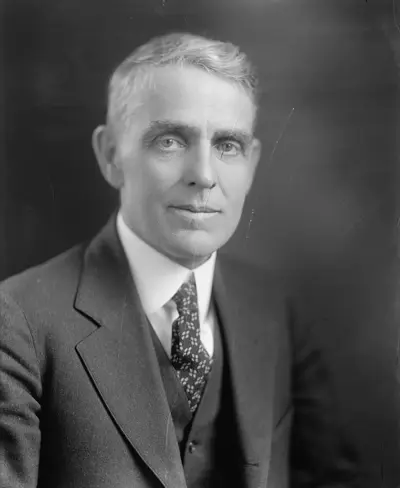
Arthur Capper was an American politician from Kansas. He was the 20th Governor of Kansas (the first born in the state) from 1915 to 1919 and a United States Senator from 1919 to 1949. He also owned a radio station (WIBW in Topeka), and was the publisher of a newspaper, the Topeka Daily Capital.
