Otto Bauer Quotes
It was impossible to govern the industrial sector in opposition to the workers … it was equally impossible to govern the great agrarian sector in opposition to the peasants.
He was wrong because he—and many others in the world-- never considered the possibility that the Russian Communists would be so brutal and kill so many people who resisted the Communist takeover of these economic sectors.
Otto Bauer, 1881–1938, Austrian Foreign Minister, Leader of the Austrian Social Democratic Party, Referring to the early Russian Communist attempt to take over the these Russian Economic Sector, Quoted in Donald Sassoon, One Hundred Years of Socialism, 1996
Sourced by: Eigen's Political and Historical Quotations


At the time, it did seem impossible that labor and capital would ever have harmonious relations. But the notion that slavery would solve the problem is as preposterous as anything ever entered into the American political dialogue. But there were many in the South, and some in the North, who actually believed it. Even 150 years later, while labor and capital relations were much better than pre Civil War, they still could not be described as “harmonious” or “friendly”.


Roosevelt shocked the conservative members of his own party with this statement. Labor unions were not then an accepted concept in American society. Anti trust legislation and enforcement was in its infancy and companies in an industry commonly conspired as to price fixing, labor negotiations and market share allocations. TR had a scrupulous sense of fairness and equity.


Virtually every advance for the working class in England (and the other countries including America) was labeled “socialism” by the conservative economic factions of the time. However, socialists were strong advocates of all these economic reforms and even in the 19th century their impact was recognized.


The class warfare and control of society previously by the wealthy made this the first article of the new Spanish Constitution. This very concept was one of the factors that led to the Spanish Civil War as Spain was in many ways still a feudal society.


This futuristic work attempted to project American life in the year 2000—then 112 years in the future. It is remarkable how many elements he successfully predicted. In this famous quote, he correctly anticipated the growth of small businesses, the transition possibilities between workers and employers. At the time, workers and employers were distinct social and economic classes with much hostility between them and relatively little class mobility. Conflicts—even bloody ones—between labor unions and employers were common. Very fascinating is his prediction regarding labor unions. At the time a minority of workers were members of unions and much of the labor strife was caused by companies trying to prevent unionization and unions trying to organize more workers. 60 years after this prediction Bellamy appeared to have been wrong in that the labor movement had grown tremendously and much larger percentage of the workforce were Union members. However, the percentage of unionized workers began to decline and by the year 2000—his target year of his prediction—a comparatively few workers were union members. While labor leaders of 2000 would argue that unions were needed as much as ever, the vast majority of the workforce tended to agree that they had become unnecessary.


At the time, the mine owners and operators claimed that they had NO obligations to their workers—not even to ensure a safe mine. There was no OSHA and workers died and were maimed on the job much more frequently than they do today. Many mine owners now accept that they have obligations to the workers, and the rest are required to have responsible and safe working conditions by law and OSHA regulations.


He had squads of thugs that he would “rent” out to other gangsters for their enforcement activities and to unions to protect themselves from goons and intimidate non union workers. However, he would not let his men work as goons and strike busters or for companies—despite huge pay offers—to keep their workers in line, a common practice at the time.

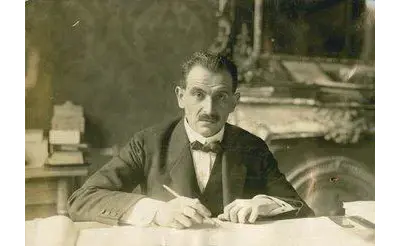
Otto Bauer was an Austrian Social Democrat who is considered one of the leading thinkers of the left-socialist Austro-Marxist grouping. He was also an early inspiration for both the New Left movement and Eurocommunism in their attempt to find a "Third way" to democratic socialism.
