Pravda Quotes
Confronting the disillusionment of the peasant at this time, when the sowing period is approaching, it is imperative for us to 'link' manufactured goods and grain at any cost. Above everything we have to show the peasant that he did not till and sow in vain.
Official `Russian Communist Party Publication. There was no way that the farming peasants could get money for their crops. They had to turn over most to the government to feed the cities. But without money, the peasants could not get the goods manufactured in the cities and there was little motivation for the peasants to farm.
Pravda, September 29, 1923
Sourced by: Eigen's Political and Historical Quotations

Immediately after the Russian Revolution, the provisional government appointed him as Ambassador to the United States. However, the provisional government was supplanted when the Bolsheviks took over. See {640094} and {640095} for more on the Communist struggle with the Russian Peasants. Not enamored of Communism, he stayed in the United States with many other Russian refugees.

Vladimir Lenin. See {640096} and {640094} for more on the Communist struggle with the Russian Peasants.
Vladimir Lenin. The “war-time” referred to the Civil War in Russia which broke out after the 1917 Revolution where the Whites and the Reds fought for control of Russia.


Executed by the English for his part in the Easter Uprising. This was a creative idea to being technology to bear on small farms. America was exploring cooperatives and other devices of trying to allow people who were not rich and had little or not capital, to utilize the emerging technology that would be so important.

The word “proprietor” at the time meant someone who had title to land. The title was then almost always tied up with the aristocratic titles. “Great proprietors” were therefore nobles who owned and controlled large land holdings. The “improvers” tended to be the businessmen—especially the manufacturers and the transportation magnates. Large landowners could just make money by renting parts of their land to tenant farmers. They needed no capital, no vision, not much skill or talent, and they didn’t have to take any risks.

This is a very important historical, political quotation. The conservatives have since the Russian Revolution conflated socialism and communism. However, here in 1932 the leader of the American Socialist Party had already described the Communist Revolution in Russia as a failure of founding an acceptable modern state. Nonetheless, even into the 21st century many conservatives describe Thomas as a Communist. See {626692} for his distinction between Communism and Socialism. The difficulty of modern nation building was explained by Thomas and others but was really not accepted until the many attempts of the early 21st century, some supported by America like Iraq and Afghanistan and the Balkans and others like the “Arab Spring.” Then his early wisdom on this point became more appreciated.


There had been a Chinese Revolution in 1911, but although there were changes at the seat of government and in urban areas, the rural areas where most of the people lived changed little if at all. The revolution failed as a result of it became a revolution without reform.


Arguing that Slavery inhibited a society from development ...

Howard was one of the first people to recognize the migration from the country to the cities brought about by the Industrial Revolution and then suggest solutions. He advocated planned suburban communities that had some elements of the country, but allowed a density of people to function in an industrial economy. He called them “Garden Cities”. Forest Hills in New York and other American planned communities were much influenced by his thinking as were many other new communities since.

He was describing England before the Industrial Revolution. The manufacturer / artisan owned his own home and had a small garden. He was not paid very well, but if business was slow his family could subsist by growing his own food and animals. With the Industrial Revolution came specialization as well as mechanization. If business was bad hundreds or thousands of workers had no way to make a living.

Zenzinov was often a critic of the Bolsheviks.
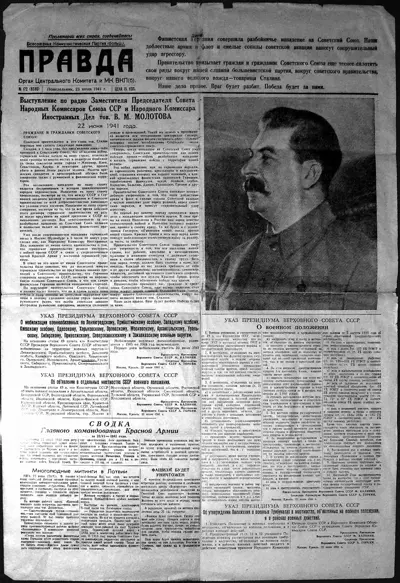
Pravda (Russian: Правда, IPA: [ˈpravdə] (listen), "Truth") is a Russian broadsheet newspaper, formerly the official newspaper of the Communist Party of the Soviet Union, when it was one of the most influential papers in the country with a circulation of 11 million. The newspaper began publication on 5 May 1912 in the Russian Empire, but was already extant abroad in January 1911. It emerged as a leading newspaper of the Soviet Union after the October Revolution. The newspaper was an organ of the Central Committee of the CPSU between 1912 and 1991.
