Spike Lee Quotes
American slavery was not a Sergio Leone Spaghetti Western. It was a holocaust. My ancestors are slaves. Stolen from Africa. I will honor them.
Lee, Spike (@SpikeLee). "American Slavery Was Not A Sergio Leone Spaghetti Western. It Was A Holocaust. My Ancestors Are Slaves. Stolen From Africa. I Will Honor Them." Twitter, 22 Dec. 2012.

America’s first political economist. By his analysis the percentage of death of slaves in the British West Indies was far greater than that of American slavery. By the time England emancipated its slaves there were far fewer than there should have been unless they had been killed off at a very high rate—usually worked to death, poorly fed, unsanitary and unsafe conditions, and little or no medical care.


See {642028} & {642029} for another quotation relating to this terrible abuse.

No sooner had Georgia Banned slavery, then some of the large planters petitioned the trustees for a reversal of the ban on the grounds that South Carolina, their neighboring colony allowed planters to use slaves and this put the Georgia planters at a major competitive disadvantage. Oglethorpe won the battle but later lost the war as the ban was overturned and Georgia became one of the worst slave states. What is interesting about this quotation is that in addition to his pragmatic reasons for banning slavery, he was morally offended but the notion and method of chattel slavery and the slave trade. See Quotes 643524 and 643525.


There is much valuable in old ideas. However every terrible idea in history is today an old idea and we certainly don’t want to respect ideas because they were old and revered or believed by our forefathers.

In the Jim Crow era and well into the 20th century, many school books and historians, wanting to minimize the enmity between North and South, tended to a historical revisionism where the real brutal and immoral edge of slavery was minimized and slave owners were depicted as being in error by modern standards but well-meaning and paternalistic. Foner, with this famous quotation, put the lie to the false image of paternalistic slavery. By the beginning of the 21st century, there were very few serious historians who still tried to characterize slavery in the South as “paternalistic” otherwise humane. See {584014} for another of Foner’s famous quotes regarding slavery

What is interesting is that when he cites the dreadful facts about American slavery, he never points out that the American slave traders rarely raided the villages and captured the slaves themselves. Most often this was done my Khamenei’s Muslim brethren slave traders who dominated the slave trade in Africa. Nor does he point out what after realizing the evil that Americans perpetrated with slavery, we ended it in the 1860s. Saudi Arabia, the central nation of Islam, did not make slavery illegal until 100 years later, and even today, there are many Saudi’s who get caught practicing slavery with household servants and forms of indentured servitude. And while Christians and the Bible tolerated slavery, the Koran and the Prophet never once condemn the practice of slavery. Democracy at any point in time is not always morally right, but it is a process by which under pressure from the people it improves over time because the people can change it and do.


This quotation distressed many ultra rightists who otherwise were avid followers of Mises. See {632407} for another quotation that distressed many European conservative devotees of Mises.

Jefferson was then the United States Minister to France. While in Paris he was offered membership by M. de Warville in the Society for the Abolition of the Slave-Trade. Jefferson felt that he had to decline because his joining would have been seen as a politically polarizing act, inappropriate for an Ambassador of the American government which was divided on the issue of slavery. Some criticize the refusal and argue that this would have been the perfect act to push the abolition perspective, and question Jefferson’s sincerity about slavery as he not only refused to join the society, but never freed his own slaves though it is argued that he never made enough money to afford to emancipate them.
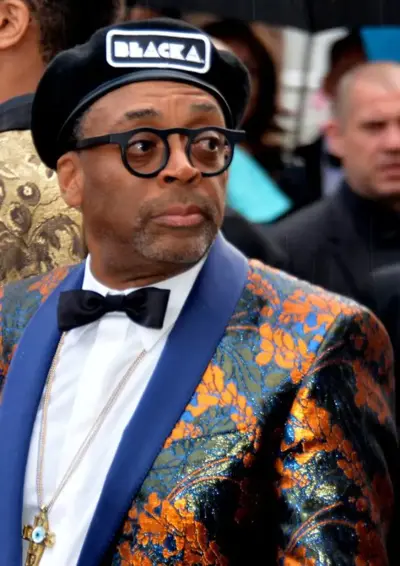
Shelton Jackson "Spike" Lee is an American film director, producer, screenwriter, actor, and professor. His production company, 40 Acres and a Mule Filmworks, has produced more than 35 films since 1983. He made his directorial debut with She's Gotta Have It (1986). He has since written and directed such films as Do the Right Thing (1989), Mo' Better Blues (1990), Jungle Fever (1991), Malcolm X (1992), Crooklyn (1994), Clockers (1995), 25th Hour (2002), Inside Man (2006), Chi-Raq (2015), BlacKkKlansman (2018) and Da 5 Bloods (2020). Lee also acted in ten of his films.
