Yitzhak Shamir Quotes
A man who goes forth to take the life of another whom he does not know must believe one thing only - that by his act he will change the course of history.
Bethell, Nicholas. The Palestine Triangle: The Struggle for the Holy Land, 1935-48. G. P. Putnam's Sons, 1979.


The quotation is text uttered by one of her characters.


Actually under Islamic law teh relatives of the victems can grant mercy, and they are frequently paid money by the family and friends of the accused murderer to do so. in many cases, the wealthy offender can avoid even long jail terms. However, if the victim's family is also very wealthy, they would often exact vengeance and have the killer executed. This is one major difference between must Western law and Islamic law. In the West we do not giver the relatives of the victim any significant role in the process. Vengeance is not recogniszed and it is society that acts. Recently some states have allowed victim families to man imact statment s to the jury or judge. There had been an aborted revolution and several hundred Turks were killed in the battles betwen the revolutionists and the police and non-revolutionary soldiers.


Simon Bolivar and other freedom fighters in South America used this quotation to justify numerous acts of retaliation against the Spanish troops controlling their countries.

Sherman, one of the most gifted generals of the Civil War. He hated the cruelty of war and the Civil War in particular as he had specifically warned his Southern friends ahead of time about what war would bring. See {585882}. Sherman was one of the first American military men to look at war without any of the romantic, patriotic, noble attributes that most others did.


Most were tracked down and assassinated by Israeli agents. The mastermind, Abu Daud was seriously wounded but was not attacked again when the Israeli’s and Palestinians began their peace negotiations.


Attila the Hun

This proverb only makes sense in the light of understanding the Arab concept of revenge—“blood.” In a rural desert environment where little can be expected of government, the Arabs have developed a law enforcement and peace keeping mechanism which while primitive from modern standards, nevertheless worked to some degree. It is that revenge—“blood” is a moral necessity and obligation of all people, and revenge is not limited by time or to the individuals involved in the first incidence. The immediate family are the first to exact revenge, but the extended family follows and often the entire clan. Sometimes revenge is tribal or even national. Anyone who fails to revenge a member in his group is not only a disgrace, but is a clear and present danger to the group because then they can be attacked with impunity. So revenge is a strong obligation of the group members and blood must be paid with blood no matter how many generations it may take. The only thing that keeps me and my family safe, is the surety what whosoever kills one of us will themselves be killed or if they die a natural death we will take revenge on one of the evildoers relatives and no one is exempt. Crime must never pay!

They had seen many other abolitionists attacked and butchered by the pro-slavery forces. The civil war of Kansas was over whether Kansas would enter the Union as a slave state of a free state. If a free state, the free states would be able to block further slavery. If Kansas were to become a slave state, the slave states would have a sufficient majority to make all future expansion hospitable to slavery. The slavery forces started sending man and families into Kansas so that they could vote; the abolitionists did the same. Both sides armed and a war began with each faction trying to kill or drive the other faction out of Kansas before the vote. See {617388} and {612516}.

Lawrence was a thriving community of abolitionists. Quantrill’s irregular force generally murdered prisoners, scalped them, mutilates their bodies, and wore scalps and body parts as clothing decoration. Quantrill “cleansed” Lawrence by burning virtually every building and killing the male population, See {617769}. It has been a source of great argument as to whether the Confederate command and politicians were fully aware of his actions and endorsed them or didn’t know. Since many of his escapades were printed in the Newspapers of the day, it is probably the case that the Confederate authorities had so much to do, that they just didn’t want to determine the truth of the accusations.
It is not known what actually happened thereafter. However, from the intensity of this letter, it is likely that unless Rice was killed or wounded in battle, he went to get his daughter and deal with her “owner”. An interesting side note is that the slave owner actually sent the letter to the Commanding Union General Rosecrans complaining. The mental set of Southern Slave Owners was incredible to us today, but that is one of the reasons that Reconstruction was so difficult. Southerners could not see anything that they did that was wrong. Unfortunately, there are a few racist people with those views still in America plus many throughout the world.
The Abenaki Indians from Canada had come South and raided many of the settlements of upstate New York. In the process, they committed many atrocities killing civilian men, women and children. Amhurst ordered Robert Rogers and his rangers to attack the Abenaki home villiage in Canada on a famous punitive raid. The Rangers, did indeed, raid the Abenaki and wiped out all the males of the tribe that were in the camp at the time. Amhurst hated Indians, but still had his standards regarding the killing of women and children, but was perfectly willing to kill all the mature males. There were no Geneva Conventions at the time. The same general introduced biological warfare by giving Indians smallpox infected blankets. See {619646}

Lee had advised the Southern leadership to avoid secession and the war that would follow. However, the Southern leaders did not really believe that the remainder of the Nation would fight and take casualties to end the institution of slavery. While many would not, they misjudged the intensity of those who would, the moral power of the abolitionists and most Northern religious leaders. Nor did they understand the importance to most Northerners of preserving the Union. And they really had no comprehension of the industrial capability of the Northern free labor states or the importance of that in a long protracted war. Lee, more sophisticated than the other Southern leader, had a more realistic assessment, but thought that there was a chance that the South might have enough early success that the North would politically make the war untenable, but he realized the cost in men and material under the best of circumstances. Lee’s surrender came shortly afterward.
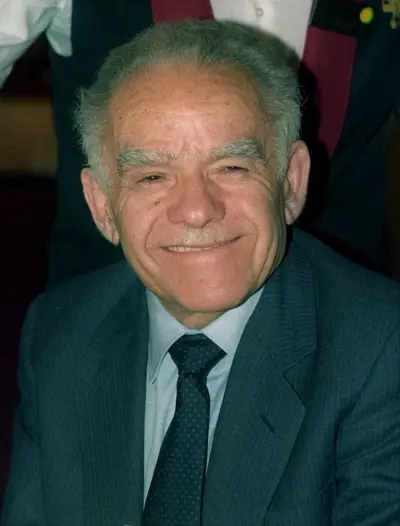
Yitzhak Shamir was an Israeli politician and the seventh Prime Minister of Israel, serving two terms, 1983–84 and 1986–1992. Before the establishment of the state of Israel, Shamir was a leader of the Zionist militant group Lehi. After the establishment of the Israeli state he served in the Mossad between 1955 and 1965 and as a Knesset Member. He served as the 6th Speaker of the Knesset and as Foreign Affairs Minister. Shamir was the country's third-longest-serving prime minister after David Ben-Gurion and Benjamin Netanyahu.
