James Buchanan Quotes
… the imbecile and indolent Mexican race
He was a Senator from Pennsylvania when he made this remark.
James Buchanan Description of Mexicans 1844
Sourced by: Eigen's Political and Historical Quotations


He was referring to the people of India and not the American Indians for who he also had little respect like almost any minority.

When called upon to resign by members of the town council, he refused on the grounds that he had a right to freely express is views of President Obama or anyone else. There was no impeachment statute at the time in Wolfeboro and people were not happy about waiting for the next election. There was much pressure brought to bear including some who boycotted the town. He resigned 2 monnths later.

Mather was urging the community to protect their children against the Devil and his band. To exemplify just how terrible Devils were to his audience, he used a comparison to the worst thing the audience was familiar with—Indians. Although there were a few examples in Colonial America of Indians being perceived as benign or even people, they were few and far between, and tended to be in New York and Pennsylvania.


The term refers to the short curly hair that many Backs have. Hoover was an inveterate racist. See {620620} for another example.

Describing the National Association for the Advancement of Colored People in speeches in the 1960's:

Senator Glen Taylor was arrested on May 1, 1948, in Birmingham, Alabama by police commissioner Eugene "Bull" Connor, for attempting to use a door reserved for African Americans, rather than the whites-only door, while attempting to attend a meeting of the Southern Negro Youth Congress. He was subsequently convicted of disorderly conduct. It is hard to believe that such a thing happened in America but it did. ER was one of the few Democrats to condemn such behavior. She took a great deal of criticism from the Southern Democrats for this column. They claimed she called White Southerners “Stupid.”


The attitude of the non-Muslims at that time was based on the Muslim attacks in the Punjab on Sikhs where entire Sikh villages and neighborhoods in towns and cities were murdered—every man woman and child. In many cases women were first raped. The Muslims had been whipped up by the leaders of the Muslim League to put terrorist pressure on the Sikh, Hindu and British to meet the League's political and territorial demands for an Independent Pakistan. Soon there was retaliation in kind and there were many Hindus, Sikhs and Muslims engaged in internecine slaughter and behaving "little better than animals".


The irony was that Breen was in charge of the Motion Picture censorship at a time when he personally could block any motion picture from being exhibited by withholding the Hollywood Production Seal of Approval. He was not only a virulent anti-Semitic but prohibited things like scenes with a double bed rather than twin beds for married couples.


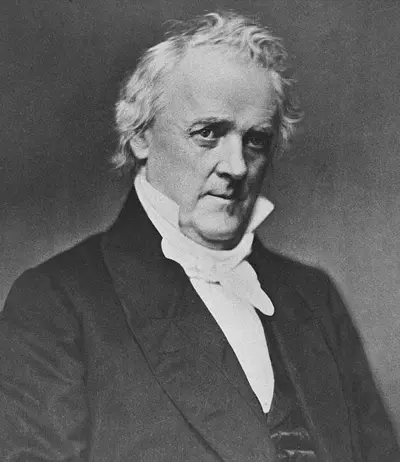
James Buchanan, Jr. was the 15th President of the United States (1857–61), serving immediately prior to the American Civil War. He represented Pennsylvania in the United States House of Representatives and later the Senate, then served as Minister to Russia under President Andrew Jackson. He was named Secretary of State under President James K. Polk, and as of 2016[update] is the last former Secretary of State to serve as President of the United States. After Buchanan turned down an offer to sit on the Supreme Court, President Franklin Pierce appointed him Ambassador to the United Kingdom, in which capacity he helped draft the Ostend Manifesto.; James McGill Buchanan, Jr. was an American economist known for his work on public choice theory (included in his most famous work The Calculus of Consent), for which he received the Nobel Memorial Prize in 1986. Buchanan's work initiated research on how politicians' and bureaucrats' self-interest, utility maximization and other non-wealth maximizing considerations affect their decision making. He was a member of the Board of Advisors of The Independent Institute, a member (and for a time the President) of the Mont Pelerin Society, a Distinguished Senior Fellow of the Cato Institute, and professor at George Mason University.
