London Times Quotes
… monster meetings
London Times, Name given to large protest meetings organized by Irish nationalist, Daniel O'Connell, 1775-1847 who were demonstrating for repeal of the Union of England and Ireland, 1843
Sourced by: Eigen's Political and Historical Quotations


The Ambassador was referring to the massive demonstrations in Lebanon forcing the Syrian-backed government to resign despite the occupation of Lebanon of Syrian intelligence operatives and troops.

He had just spent 15 months in Italy and did not admire Italian symphonic abilities. The English Chartists wanted to organize demonstrations and protests but had little experience and know how.


He was then the Home Secretary and his guidance and restraint was to avoid overreaction. The magistrates however did not act with great restraint over a series of demonstrations which culminated in 11 deaths in The Peterloo Massacre,

He was arguing that the government should be able to prohibit public demonstrations on the grounds that the protesters are “irresponsible power.” This position has been taken sometimes by the American right, and is common in all totalitarian states.


Louis Napoleon had seized control of France and had very little popular support amongst the aristocracy and middle class. However, the Socialists leading the uprisings frightened them more than Louis Napoleon as the Socialists had the support of the peasants who resented the abuses of the aristocracy and many of the middle class. This was true class warfare and not at all what was possible in the United States when American conservatives would claim “class warfare” when there was a move for more progressive taxation. In Europe, class warfare really meant death and destruction, so for many who knew the history, the claim of “class warfare” was frightening and a large part of the “Red Scare” in the United States.

Shortly after, he backed off the notion of having a bloodbath removing protesting students.


Several years before the Battle of Bunker Hill, revolutionary activity had already broken out in the American colonies—See {634132} for an example. This law gave the British authorities much more “clout” in dealing with the “seditious” American activities. It protected English law enforcement officials from being tried in local Colonial courts for murder or assault in putting down insurrections. George Washington and other Patriots were outraged over this law. See {634131}.

She was on a trip to Staten Island of New York City. It is a very small borough and whereas the rest of New York City has always been Democratic Supporters, Staten Island has usually supported the Republican Party, and to get there, they had to drive through Wall Street where the President and Mrs. Roosevelt were considered communists by many people. She appeared in public even more than the President who was limited by his paralysis. And she was used to the cheers and the boos and insults. This passage is typical of her attitude. Most first ladies find the boos and name calling very disconcerting, but not Mrs. Roosevelt.

He wrote this anonymously as calling for a boycott of English manufactured clothing might have gotten him into much difficulty.

Two protesters were killed. The demonstration so affected the government that they pressured the Belfast local authorities to announce substantial increases in relief. The economy and the employment picture got no better that year.

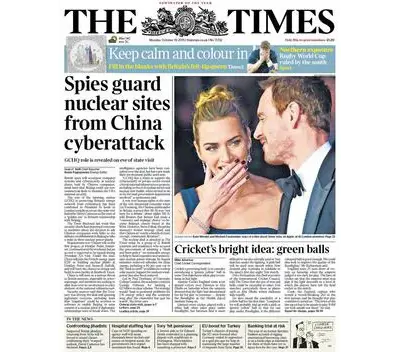
The Times is a British daily national newspaper based in London. It began in 1785 under the title The Daily Universal Register, adopting its current name on 1 January 1788. The Times and its sister paper The Sunday Times (founded in 1821) are published by Times Newspapers, since 1981 a subsidiary of News UK, in turn wholly owned by News Corp. The Times and The Sunday Times, which do not share editorial staff, were founded independently, and have only had common ownership since 1966.
