Oliver Cromwell Quotes
You have sat too long here for any good you have been doing. Depart, I say, and let us have done with you. In the name of God, go!
Cromwell to the Rump Parliament: These same words were used by Tory insurgent Leopold Amery in 1940 calling for the resignation of British Prime Minister Neville Chamberlain.
Oliver Cromwell, 1599-1658, Revolutionist, Ruler, & Lord Protector of England, Statement dismissing Parliament, April 20, 1653
Sourced by: Eigen's Political and Historical Quotations

The Parliament was paralyzed by the issue of wartime leadership when PM Neville Chamberlain failed so miserably in standing up to the Germans at Munich. The speech urging the termination of the Prime Minister’s government reminded all of the famous speech whereby Lord Protector Oliver Cromwell dismissed Parliament in 1655 (see related quote). In this case Amery had no power, but much influence as the Government fell a few days later and Winston Churchill assumed British leadership.


Berg, one of the early OSS recruits, was a brilliant loner and somewhat paranoid. His early modus operandi was to work with no partners, never as part of a team, and only report to the head of the agency and a deputy or two and otherwise never reveal where he was or how he did things. Berg however was brilliant and multilingual, and even was able to have discussions with the best Physicist left in Germany--Nobel Prize winner Werner Heisenberg. Berg determined that Heisenberg was not working on an atomic bomb with some clever technical discussions and listening to some of Heisenberg's presentations. Therefore, following his orders, he did not assassinate the German Scientist whuch he was prepared to do. Other than OSS officials, many in America did not believe that the Germans would not have their best scientist working on Nuclear Energy. However, Hitler was biased against what he called "Jewish Sceince" and bet on jet planes. After the war, The CIA reorganized the American espionage effort and there was no place for Berg’s old school style.

Commenting on his retirement from Congress:
La Follette's war stand and attacks on the President were not usually appreciated.

After being surrounded by the Germans for seven days at what would later be called the Battle of the Bulge, a German officer notified the Americans that they would accept their surrender. McAuliffe’s one word response summed up the resolve of the Americans who were surrounded. The Americans managed to hold the line and defeat the German’s last major offensive of World War II.

In 1642 King Charles I asked the whereabouts of 5 members of Parliament whom he wanted arrested:

He was expelled from Parliament for such.

Kennedy (the father of JFK) was U.S. Ambassador of Britain at a critical time in history—the rise of Nazism. To Roosevelt and most other’s surprise, Kennedy turned out to be a Nazi sympathizer. He was complimentary towards Hitler and Mussolini, an advocate for fascism. He had been a producer of films and he tried to pressure American film-makers not to make films depicting Hitler and Nazi Germany in a less than favorable light. He supported Charles Lindbergh and American Fascists and conspired with the English upper class supporters of Hitler and Fascism. He had publicly and privately argued against Lend Lease and military aid to England. Roosevelt, an incredibly persuasive leader, had invited him to Hyde Park to straighten out what he thought was a misunderstanding. The two men were in a room alone for 10 minutes when Roosevelt sought his wife and made the statement. Kennedy of course resigned. FDR never spoke to him again.


He said this as he threw them out of his White House office.

Goodpaster served as Staff Secretary and Defense Liaison Officer to President Eisenhower from 1954–1961. McCarthy accused many competent, loyal Americans of disloyalty, incompetence and treason. The reason that this particular quotation was noteworthy was that it particularly offended President Eisenhower and galvanized him into action to stop McCarthy’s excesses. See {632334}.


Virtually every scientist and most laymen realized that the air quality of London was getting worse and worse. But the politicians did nothing until in 1952, it became so bad that people dies, traffic came to a standstill, business had to shut down and the city was just about paralyzed. Then they finally acted and improved the air quality immensely.


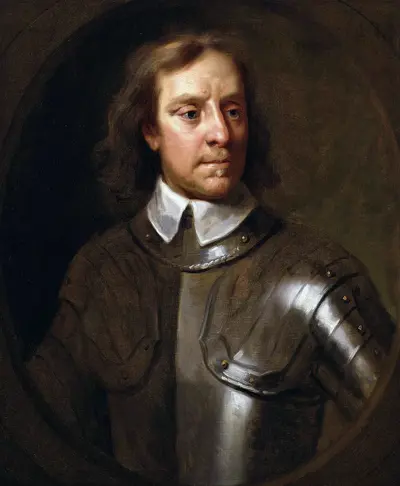
- Born: April 25, 1599
- Died: September 3, 1658
- Nationality: English
- Profession: Farmer, Parliamentarian, Military Commander
Oliver Cromwell was an English general and statesman who, first as a subordinate and later as Commander-in-Chief, led armies of the Parliament of England against King Charles I during the English Civil War, subsequently ruling the British Isles as Lord Protector from 1653 until his death in 1658. He acted simultaneously as head of state and head of government of the new republican commonwealth.
