Moe Berg Quotes
For Christ’s sake, quit being bureaucrats.
Berg, one of the early OSS recruits, was a brilliant loner and somewhat paranoid. His early modus operandi was to work with no partners, never as part of a team, and only report to the head of the agency and a deputy or two and otherwise never reveal where he was or how he did things. Berg however was brilliant and multilingual, and even was able to have discussions with the best Physicist left in Germany--Nobel Prize winner Werner Heisenberg. Berg determined that Heisenberg was not working on an atomic bomb with some clever technical discussions and listening to some of Heisenberg's presentations. Therefore, following his orders, he did not assassinate the German Scientist whuch he was prepared to do. Other than OSS officials, many in America did not believe that the Germans would not have their best scientist working on Nuclear Energy. However, Hitler was biased against what he called "Jewish Sceince" and bet on jet planes. After the war, The CIA reorganized the American espionage effort and there was no place for Berg’s old school style.
Moe Berg, 1902-1972, Professional Baseball Player, Attorney, and OSS-CIA Secret Agent, Comment to CIA auditors who asked him to account for cash that had been advanced to him for his spying activities
Sourced by: Eigen's Political and Historical Quotations


Referring to the administrative procedures required of the Navajos by the Bureau of Indian Affairs:


even though in this case the objective The State Department, the Defense Department and most important President Kennedy had decided to get rid of Diem. Most of the Central Intelligence Agency thought that this was a very unwise policy, because Diem was a known risk, and the people who would replace him and their talents and policies were unknown. The negatives of Diem—the facts that he, a Christian, was persecuting the majority Buddhists, was totally corrupt, and not a very good leader was less distressful to the CIA than to the President and the other agencies as the intelligence agency frequently not only tolerated “offensive” allies, but actually employed them including war criminals. Another importance of this quotation is that it shows that it was by no means certain that the CIA would always follow the orders of the President and the government policy makers. Colby, who was not the agency director at that time but was the head of the South East Bureau, was one high level official who argued that the policies should always be followed even if they were unwise or foolish. Another importance of this quotation is that it illustrate a common error that administrations are frequently forced to make: making a policy decision to eliminate a problem while not having much of an idea of what the alternative or consequence would be when the policy is implemented. The Syrian Civil War in 2013 was a good example. The Government side appeared to have used Chemical Warfare on Civilians and public opinion demanded that we do something. However, having a no-fly zone or any of the alternatives to prevent (punish) the government for the Chemical Warfare would strengthen the rebel side which was made up of numerous factions—some of which were known Islamic fundamentalist terrorists and jihadists. If the balance of power were tipped toward the rebels, the consequence for the American national interests were unknown—just as the consequence of ousting Diem was unknown and turned out to also be bad and was probably worse.


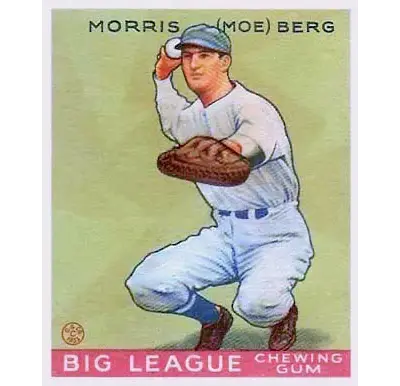
Morris Berg was an American catcher and coach in Major League Baseball, who later served as a spy for the Office of Strategic Services during World War II. Although he played 15 seasons in the major leagues, almost entirely for four American League teams, Berg was never more than an average player and was better known for being "the brainiest guy in baseball." Casey Stengel once described Berg as "the strangest man ever to play baseball".
