Calvin Coolidge Quotes
You can't expect to see calves running in the field the day after you put the bull to the cows.
Ex-President Calvin Coolidge was giving advice to Herbert Hoover. Hoover's rejoinder was: No, but I do expect to see contented cows.
Calvin Coolidge, 1872-1933, 30th President of the United States (Republican, MA), Dialogue with Herbert Hoover
Sourced by: Eigen's Political and Historical Quotations


This was very consistent with the programmatic philosophy of his boss, FDR, who campaigned on no specific solutions to the Great Depression but promised to try things and of the did not work, try others. His predecessor, Hoover, would try nothing as most ideas contradicted his philosophy or was not favored by the wealthy business interests of the day.


The only soldier ever so honored


Even today, the lack of logic in many fields—especial politics and public policy—has caused an intellectual and emotional rift between scientists and many in government. Bush was one of the great scientists and thinkers in American history. He had advised FDR to go ahead with the research and development program to try and develop an atomic bomb. He was the only Government Official who Roosevelt discussed the idea with. At the time, Bush as a government official supervised and directed many thousands of scientists, and was one of just a few scientists who monitored and advised on the Manhattan Project to develop the Bomb.


Jorge Mario Bergoglio


This admonition of his applied not only to initiating war, but to increasing unemployment for a worthy purpose like controlling inflation. He sought solutions where pain was borne by tall if necessary, but not to particular subgroups (identifiable or not) to the degree that they would suffer badly. In general, we should not sacrifice some for the good of the whole without their volunteering, as in a volunteer army.
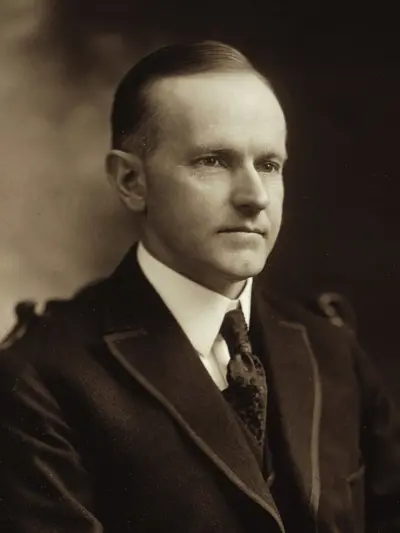
Calvin Coolidge was an American lawyer and politician who served as the 30th president of the United States from 1923 to 1929. A Republican lawyer from New England, born in Vermont, Coolidge worked his way up the ladder of Massachusetts state politics, eventually becoming governor of Massachusetts. His response to the Boston Police Strike of 1919 thrust him into the national spotlight and gave him a reputation as a man of decisive action. The next year, he was elected the 29th vice president of the United States, and he succeeded to the presidency upon the sudden death of Warren G. Harding in 1923. Elected in his own right in 1924, he gained a reputation as a small-government conservative and also as a man who said very little and had a rather dry sense of humor.
