Dwight D. Eisenhower Quotes
Why are we proud? We are proud, first of all, because from the beginning of this Nation, a man can walk upright, no matter who he is, or who she is. He can walk upright and meet his friend - or his enemy; and he does not fear that because that enemy may be in a position of great power that he can be suddenly thrown in jail to rot there without charges and with no recourse to justice. We have the habeas corpus act, and we respect it.
Eisenhower, Dwight D. "Remarks at the B'nai B'rith Anti-Defamation League Dinner, Washington, D.C." 23 Nov. 1953. Public Papers of the Presidents of the United States: Dwight D. Eisenhower, 1953, National Archives and Records Service, 1960, p. 799.


Although not particularly noticed at the time, FDR was the first person to use the term, “Human Rights” which is today in all our vocabularies.


This was the first time that the term “human rights” was used. FDR, a personal friend of Wells, then used the term in his Four Freedoms speech and thus was the first politician to use the term. Later Mrs. Roosevelt was instrumental in using the phrase in the United nations “Declaration of Human Rights” and enshrined the term in the English and world language.


The best investment the state can make is liberty and the rule of law—and respect for man’s dignity.
The human desire for dignity has been often underestimated as a major force in history.


Many believe that this was one of his greatest quotations. He made this statement when government itself was under attack and the nation was as polarized as any living could remember with President Trump alternately attacking the administration of other presidents and extolling his own while the majority of Americans were not favorable about him and his attacks on others and his repeated falsehoods.

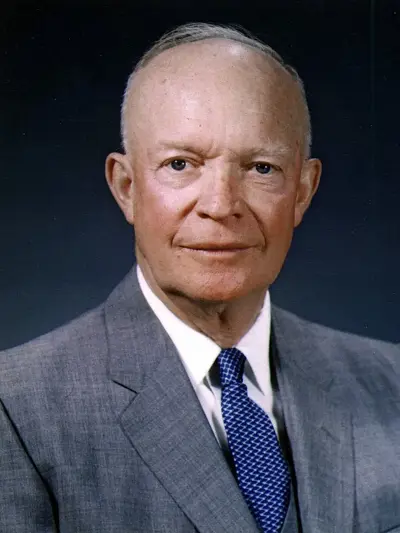
Dwight David "Ike" Eisenhower GCB OM GCS CCLH KC NPk was an American military officer and statesman who served as the 34th president of the United States from 1953 to 1961. During World War II, he became a five-star general in the Army and served as Supreme Commander of the Allied Expeditionary Force in Europe. He was responsible for planning and supervising the invasion of North Africa in Operation Torch in 1942–43 and the successful invasion of Normandy in 1944–45 from the Western Front.
