John Kenneth Galbraith Quotes
While 18th century Americans objected to taxation without representation, they also objected equally to taxation with representation.
John Kenneth Galbraith, 1908–2006, Economist, U. S. Ambassador to India (Democrat), Quoted in John Steele Gordon, Hamilton’s Blessing
Sourced by: Eigen's Political and Historical Quotations


This was one of the first and is considered the best of the Colonial writings against taxation without representation. Despite this, Dulany is not well known in American history because when the Revolution finally came he was a loyalist.


Lee at that time was one of the leaders of the American colonists’ cause. He was born in England and was an old friend of Burgoyne who had just arrived in America. Lee wanted to explain the American viewpoint. Lee later became the senior major general under Washington.

As a result was in 1799 he was indicted, convicted, and fined $480 and sentenced to 18 months in jail. In 1801, newly elected President Thomas Jefferson pardoned Brown along with all violators of the act.


This quotation shows that the dissent leading to the American Revolution did not emerge suddenly in 1776 after the Battle of Bunker Hill. Dissent, sedition and even violence was documented here in 1774. Salem at the time was the second largest port in the colony and the customs tax collectors—Loyalist Americans—were run out of Salem.

Wilkes was a strong advocate for the American cause—so much so that some in Parliament tried to deny him his seat in Parliament for his disloyal point of view.
This was one of the first and is considered the best of the Colonial writings against taxation without representation. Despite this, Dulany is not well known in American history because when the Revolution finally came he was a loyalist.

In the history of America

It was repealed the next year, but much damage had been done to the relationship between the American Colonists and the mother country. It set the tone for American transition to a desire for independence. . Fox, a conservative on most issues was an absolute radical on the issue of America. To aggravate the hawks in parliament, he used to dress in the colors of George Washington’s uniform to show his support once the war broke out.

This is a very interesting quotation. A contemporary historian tells us how rapidly the American colonists organized when Parliament passed the Tea Tax. Even with the Internet and social media it would be hard to organize representation from 13 states that fast today. The word of mouth and mail of the day was surprising to most of us. The passion on the issue and the public interest must have been extraordinary. Ramsay was the first major historian of the American Revolution.

At the beginning of the dispute between America and England, the issue was the raising of internal American taxes by Parliament without any American representation in Parliament. The issue escalated and when the British began using force, independence then became the American objective.


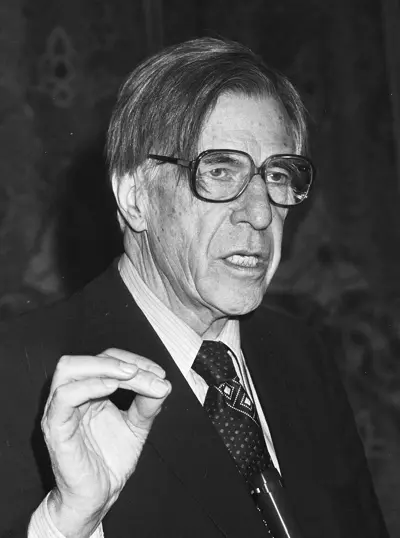
John Kenneth Galbraith OC, also known as Ken Galbraith, was a Canadian-American economist, diplomat, public official and intellectual. A leading proponent of 20th-century American liberalism, his books on economic topics were bestsellers from the 1950s through the 2000s. As an economist, he leaned toward post-Keynesian economics from an institutionalist perspective.
