Ishmael Beah Quotes
Whenever I speak at the United Nations, UNICEF or elsewhere to raise awareness of the continual and rampant recruitment of children in wars around the world, I come to realize that I still do not fully understand how I could have possibly survived the civil war in my country, Sierra Leone.
Beah, Ishmael. "The Making, and Unmaking, of a Child Soldier." The New York Times, 14 Jan. 2007.


Many German officials, after the war, tried to justify the Concentration Camps. However, the argument has little historical merit as by the time the Nazis implemented them, they had complete control of the country and were in no danger of Civil War. And certainly the torture, medical experiments, and murders were not required to prevent civil strife. And using inmates as slave laborers in Donitz’s shipyards had nothing to do with civil war. After the war Donitz was found guilty of Unrestricted Submarine Warfare and using thousands of slave laborers in his shipyards. He was sentenced to 10 years, one of the lightest sentences if the German War Crimes Trials. He himself was not only an enthusiast about the concentration camps but was a murderous anti-Semite as well. See {624978}. The thought that the Germans had to kill little children to avoid civil war is as absurd as any argument could be.


While there were atrocities committed by both sides in the Civil War, the proportion tended to be heavily weighted by Confederate perpetrations. The Confederate officers were not appointed by the command structure and under strict military discipline, but they were elected by the troops and could be so removed (except for the general officers who were appointed by the confederacy). Also, the confederate troops were not as well fed or supplied as the North and they had fewer resources with which to fulfill their obligations to prisoners. In a number of battles, ill-clothed soldiers stripped the Union dead, wounded and prisoners, often naked to use their shoes, blankets and clothing, Union prisoners of war were much more badly abused in the prisoners of war camps like Andersonville which were not under the command of Robert E. Lee.


Hamas had fired thousands of rockets and other missiles at Israeli population centers—war crimes under the Geneva Conventions. Israel finally retaliated against Hamas facilities in Gaza. However, in an unprecedented effort to avoid civilian casualties, the Israeli Defense Forces warned the people by indicating which targets they were going to strike. They also dropped leaflets in Arabic telling the civilians that they are not the targets but to try and avoid harm to them and their families, they should evacuate the neighborhoods that would be under attack. Hamas had placed their missile launchers and other weapons in and near schools, hospitals, mosques and civilian housing risking their civilian population—see {640841}.
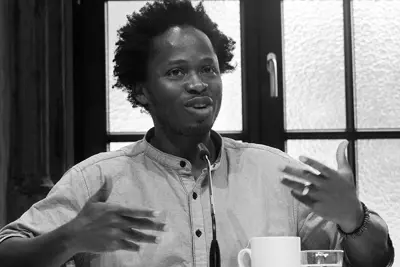
Ishmael Beah is a Sierra Leonean author and human rights activist who rose to fame with his acclaimed memoir, A Long Way Gone. His novel Radiance of Tomorrow was published in January 2014. His most recent novel Little Family was published in April 2020.
