Cornel West Quotes
Barack Obama commits war crimes - Somalia, Yemen. He commits war crimes in Pakistan, Afghanistan. Martin Luther King Jr. tried to keep a spotlight on war crimes, to keep track of the innocents killed... There is a major clash.
West, Cornel. Interview by Amy Goodman. Democracy Now!, 19 Jan. 2015.


[During the Guatemalan Civil War, the military had often tortured, murdered disappeared and sexually enslaved female relatives of men they suspected of being rebel. The object was to humiliate and emasculate the insurrectionists so that others will not join them and they will cease their revolutionary activities to protect their women. The civil war ended in 1996, and although military war criminals had been tried earlier but never for crimes – sexual crimes against women. 20 year had elapsed since the end of the war and this famous trial. The two war criminals were sentenced to 120 and 240 years in prison respectively, but they had escaped justice for more than two decades. The United States, in the middle of the Red Scare was supporting and financing the Guatemalan government and military. In addition America trained many of the military in counter-insurgency which taught some methods that were contrary to International Law and which were illegal for American soldiers to engage in. After official documents of the era were declassified, it became clear that U. S. officials—–especially the CIA--were aware of the excesses and war crimes of the Guatemalan military, but did little to stop it. See Quotes 583699, and 583697 for more on the American involvement.]

This statement was made before the 2012 Syrian Revolution.


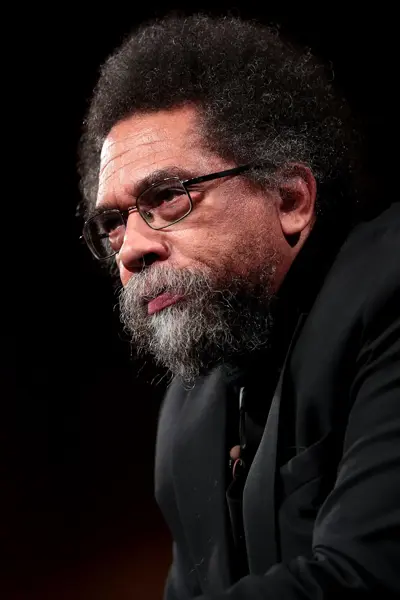
Cornel Ronald West is an American philosopher, political activist, social critic, and public intellectual. The grandson of a Baptist minister, West focuses on the role of race, gender, and class in American society and the means by which people act and react to their "radical conditionedness." A radical democrat and socialist, West draws intellectual contributions from multiple traditions, including Christianity, the black church, Marxism, neopragmatism, and transcendentalism. Among his most influential books are Race Matters (1994) and Democracy Matters (2004).
