Gideon Lincecum Quotes
When the horse and the mare both trot, the colt seldom paces.
In 1849, Gideon Lincecum introduced a proposal before the Texas legislature hoping to combat crime. His solution was to castrate criminals in the manner of gelding bulls, thus literally cutting off the bloodline in order to prevent criminals from reproducing new criminals. Like many others in American and world history, he erroneously believed that criminality was hereditary. To persuade the legislators, he used this folksy analogy. His proposal was rejected.
Gideon Lincecum Presentation to the Texas Legislature 1849
Sourced by: Eigen's Political and Historical Quotations


Mulcts were fines. This was the then common view of educated people regarding the criminal justice system and what we would consider today as barbarous punishments. Note the view that those who had money should pay fines for some crimes but those without money should have their bodies mutilated for the same crimes.

William the Conqueror. This is one of the first if not the first nationwide abolition of capital punishment in history. Ironically, the two alternatives that the abolition law allowed would both be illegal and repugnant to us today even though we allow capital punishment.


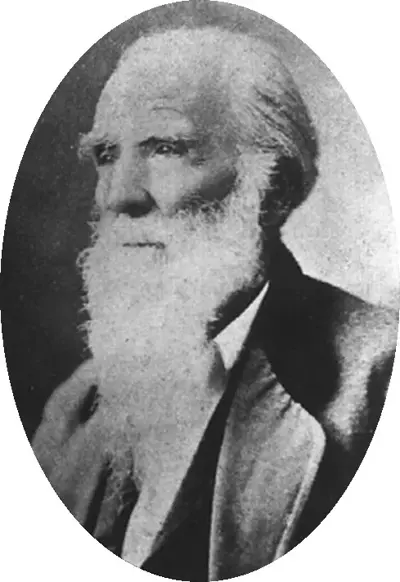
Gideon Lincecum was an American pioneer, historian, physician, philosopher, and naturalist. Lincecum is known for his exploration and settlement of what are now the U.S. states of Alabama, Mississippi and Texas, which was then beyond the western borders of the Thirteen Colonies. Lincecum had good relations with Native Americans as he explored the wilderness in the American Deep South. He was son of Hezekiah and Sally (Hickman) Lincecum, and was born in Warren County, Georgia, on April 22, 1793. Lincecum was self-educated. He spent his boyhood principally in the company of Muskogees. After successive moves, he and his wife, the former Sarah Bryan, moved in 1818 with his parents and siblings to the Tombigbee River, above the site of present Columbus, Mississippi.
