Joel Roberts Poinsett Quotes
When mustered, a majority of them are armed with walking canes, fowling pieces, or unserviceable muskets
This is another quotation illustrating that the notion of the armed American, skilled with firearms, ready to fight for the country, was a romantic myth. Few Americans, except those in danger from Indians on the frontier, wanted guns; fewer still knew how to use or care for them; very few could afford them.
Joel Roberts Poinsett, 1779-1851, U. S. Minister to Mexico, U. S. Secretary of War, Description of the State Militias, Report to the Congress of the Secretary of War
Sourced by: Eigen's Political and Historical Quotations


More than a decade before Hamilton wrote this, a Maryland commission used the phrase “well regulated militia” earlier. (See {588394}.) It would be less than 2 years before the phrase “well regulated militia” would be added into the Constitution in the 2nd Amendment of the Bill of Rights—September 25, 1789. The Maryland resolution was the last of several passed at a meeting by which Maryland endorsed resistance to the British before the actual Revolution. So these resolations would have been widely distributed throughout the colonies and known by the leaders. Whether the drafters of the 2nd Amendment got the phrase from Hamilton’s Federalist 29 or from the Maryland Resolutions is not known but Hamilton’s was much more current. Did he get the phrase from Maryland? Did Congress get it from him? Did Maryland originate the phrase or was there an earlier use that influenced the Maryland drafters? At this point no one is sure, but the phrase is critical to the meaning of the 2nd Amendment because the Supreme Court has repeatedly held that the Second Amandment does not apply to individuals but only to the State’s right to bear arms within the “well regulated militia” and not as individual citizens. The right is that of the State government and that is why a state can control guns including banning them if they choose. So an individual in America does not have the constitutional right to bear arms. He may have a state constitutional right but in other states he may not use a gun in certain places and may not possess certain types of guns like hand guns which are illegal in New York, Washington DC and some other places.

It would be more than a decade before the phrase “well regulated militia” would be added into the Constitution as the 2nd Amendment of the Bill of Rights. This resolution was the last of several passed at this meeting by which Maryland endorsed resistance to the British. So these resolations would have been widely distributed throughout the colonies and known by the leaders. In 1788 Alexander Hamilton Published Federalist 29 which also used the phrase. (See {588393}.) Then on September 25, 1789, the Congress proposed the Bill of Rights and the 2nd Amendment using the same key phrase, “well regulated militia.” Whether the drafters of the 2nd Amendment got the phrase from Hamilton’s Federalist 29 or from the Maryland Resolutions is not known but Hamilton’s was much more current. Did he get the phrase from Maryland? Did Congress get it from him? Did Maryland originate the phrase or was there an earlier use that influenced the Maryland drafters? At this point no one is sure, but the phrase is critical to the meaning of the 2nd Amendment because the Supreme Court has repeatedly held that the Second Amandment does not apply to individuals but only to the State’s right to bear arms within the “well regulated militia” and not as individual citizens. The right is that of the State government and that is why a state can control guns including banning them if they choose. So an individual in America does not have the constitutional right to bear arms. He may have a state constitutional right but in other states he may not use a gun in certain places and may not possess certain types of guns like hand guns which are illegal in New York, Washington DC and some other places.


Washington was very unhappy with militia even from his native Virginia. See also {613030} This quotation is very important because the common belief is that all Americans in Colonial America were skilled with a gun and that there was a strong gun ownership culture. Many people quote {613057}. However, that was not the case as this and other research has shown. Less than one quarter of the Virginia militia had any weapon. Guns were expensive and only a minority of Americans could afford them. Despite the image of sharpshooters, and there were some, most guns were very inaccurate in the hands of most men.

This is yet another quotation demonstrating that the image of early America as a gun culture where most men were armed, skilled with those arms, and ready to come to the defense of the country. It turns out that none of the three corresponded to any historical reality for most Americans.

In the early 18th century, things were very unsettled between Scotland & England with the succession of both countries in question. The result was the famous union of the two countries in 1707. At the time the Scottish Parliament wanted to intimidate the English as well as to be able to fend off English troops if things did not go well. The clause has much contemporary importance because it shows what a nation would do that wanted every man armed against powers which might restrict their freedom. The American Founding Fathers at the Constitutional Convention knew about this law. They even adopted other ideas from this law--{615975}. If the Founders had wanted every man armed as some modern gun control opponents maintain, they were brilliant drafters and would doubtless have written something like this. It supports the view that what was intended was not an armed nation but a nation where the states could organize “well ordered militias” and the Second Amendment resulted.

Even allowing for a certain amount of exaggeration, it is clear that there were many Americans who were personally armed in this period.
This is a very clear statement of a theory offered by some gun advocates. Opponents observe that if this were true, the parts of the country that had the highest gun ownership would have the lowest gun deaths and crime in general, but that is not true. Obversely, when some jurisdictions like Florida have made guns easier to obtain, the crime rate has not increased as some gun opponents would predict.

The “New World Order” is a “secret organization” which a number of conspiracy theorists believe is running much of the world behind the scenes and is planning to disarm all Americans as an early step in the takeover of America so they can have a dictatorial one world government. Jones is one of those believers.

Thirty young black men and women carrying pistols, revolvers, and shotguns, appeared at the grand entrance of the California Capitol Building. The capital police stopped them and asked what they were going to do with their guns. Bobby Seal replied by asking the police officer what he was going to do with his gun. Seale and the Black Panthers then quoted the Second Amendment to the Constitution and insisted that they had a right to carry guns. Seale led his overtly armed followers inside while police and legislators looked on in horror. They were breaking no law. See the linked quote for Seale’s statement at Sacramento.


This quotation is often provided by historians studying the gun culture of America. Even conservatives like Ames did not see a gun or an armed citizenry as important to America’s survival or well being. Contrary to popular belief, even the State Militias’ whose rights to bear arms was written into the Second Amendment did not bother to do so. In 1803 only three state militias had rifle companies. Firearms of the time were expensive, difficult to maintain, and hard to use. Unless one needed them for defense, it was too much of a bother. Even in the aftermath of the War of 1812 only 30% of Massachusetts adult men owned guns; by 1839, the rate was below 10%. It was on the frontier where guns were popular and necessary. See {613080}.

He wrote it under the pseudonym of “The Pennsylvanian”.
Even though the research was done by the U. S. CDC (Communicable Disease Center), the finest public health research center in the world, it was still attacked by the National Rifle Association and many of their supporters in Congress. The response was so intense that in the appropriations for the CDC there was an amendment that required that Federal Money not be spent for “Gun Safety Research”. So Federal Health Agencies were actually barred by Congress from doing any research as to how guns can be used, stored and manufactured more safely.

Although written by a science fiction writer, this is one of the best quotations arguing for widespread gun ownership.

At that time, ideology was not a driving political force and individual politicians often were hard to classify. For example, Humphrey was at the far left—an ultra liberal. Yet he was a staunch advocate of the right to bear arms. 50 years later there were no liberals who did not want to restrict gun ownership, And at that time, many Republicans were advocates of gun control, an unheard of situation in the 21st century beginning.


Note the phrase “well regulated militia.” This is the exact same phrase which the Founding Fathers chose to use in the Second Amendment of the Bill of Rights over a decade later. And in this amendment the right to bear arms is provided for the “well regulated militia” and not for individuals as the Supreme Court has ruled many times. This quotation shows that the phrase was not just drafted by the founders, but had a clear and established meaning of which they were aware. Many people think that the phrase did not have a known meaning at the time but this quotation shows differently as the Constitutions of all the States were available to and studied by the Congress and most educated people.
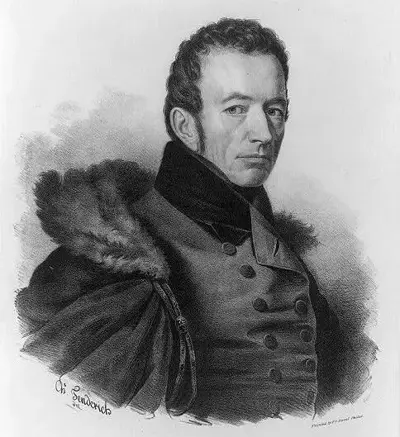
Joel Roberts Poinsett was an American physician and diplomat. He was the first U.S. agent in South America, a member of the South Carolina legislature and the United States House of Representatives, the first United States Minister to Mexico, a Unionist leader in South Carolina during the Nullification Crisis, Secretary of War under Martin Van Buren, and a co-founder of the National Institute for the Promotion of Science and the Useful Arts (a predecessor of the Smithsonian Institution).
