Edward Coke Quotes
When a mad man is executed, it is a miserable spectacle, both against law, and of extreme inhumanity and cruelty, and can be no example to others.
Although this is generally followed as a legal principle in America, states like Texas have executed felons who most other jurisdictions would see as Coke’s “mad man.”
Edward Coke, 1552-1634, English Solicitor General, Attorney General and Speaker of the House of Commons, Third Institute, 1641
Sourced by: Eigen's Political and Historical Quotations


In his early career, her supported capital punishment, but changed his mind as can be seen in this quotation.


The dilemma at the time was that the death penalty had bee used far more frequently against the poor and against monorities than for the exact same crimes when committed by majority whites.

Einstein had changed his mind. He like almost everyone else at the time favored the death penalty, but in 1927 came to the new conclusion for the same reasons that many American politicians stated 70 years later. He had no compunctions against capital punishment for murderers who were dangers to society, but the potential error of the justice system led him to oppose state sanctioned execution. At the time the number of errors in capital cases that had been demonstrated were few. But as a scientist, Einstein knew that all human endeavors were prone to error. He was a strong law and order supporter however—see {588606}.


The book was very critical of the way capitol punishment is meted out in Singapore. The Singapore Attorney General’s Office then claimed that the book had brought disrespect on the courts of Singapore by being so critical and tried him for “criminal defamation”. Shadrake was fined $30,000 and when he planned on publishing a second edition he was tried again and threatened with Jail. The fundamental problem is that if part of a nation’s government is corrupt, ineffective or incompetent and someone tells that to the public, there will certainly be less respect for the institution. So demanding respect, is tantamount to abandoning freedom of speech in general and criticism of the government in particular,


This is one of the sharpest dissents in Supreme Court history. Rarely to justices write opinions accusing other justices of a gross immorality or crime. The majority held that the Supreme Court should not grant a new trial simply because there was some evidence discovered showing him innocent. See {635412} for a quotation from the majority opinion.

Wade was urging the Prince to abolish the Death by 1000 Cuts {641825} and simply rely on beheading the form of execution for “lesser” crimes. Note that the Prince’s fears and arguments parallel the same given by modern proponents of the Death Penalty—without it criminals would not be controlled and instability would ensue.

This is one of the earliest views that insane people should not be criminally punished for their acts. To a great extent, Constantine and his contemporaries believed that insanity was the work of the Devil or demons and therefore one should not sympathize with the condition either.
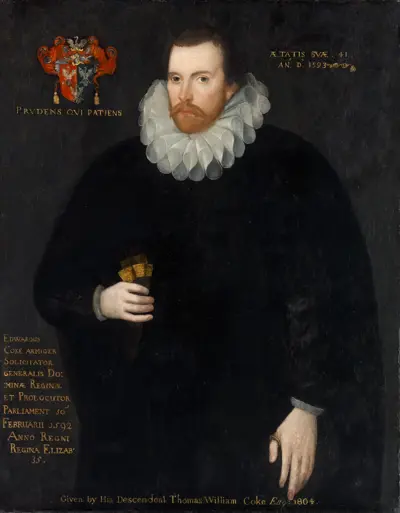
Sir Edward Coke SL was an English barrister, judge, and politician who is considered to be the greatest jurist of the Elizabethan and Jacobean eras.
