Book of Isaiah Quotes
What mean ye that ye beat my people to pieces, and grind the faces of the poor.
Old Testament, Isaiah, 3:15
Sourced by: Eigen's Political and Historical Quotations


The highway was planned to go through a poor neighborhood which had a high percentage of Black residents—all of whom would have to find other housing and move to make room for the highway. If the government plans a highway through a wealthy area, the cost to condemn and pay for the land will be much greater than if a poor neighborhood is acquired. For urban highways, the poor almost always bear a disproportionate share of the inconvenience while the major benefit inures to the wealthy and middle class. Abbot had been a labor organizer and a professional artist before he entered politics. The graphic is of his famous poster which by itself stopped the plans to build the highway very quickly.


Indian and Black slaves were outlawed very early in Connecticut, not on moral grounds of concern for the Indians and Blacks, but because of the negative effects on the white poor. Why would anyone pay the poor any more than the amortization costs of a slave? Therefore there was no way a poor white could make a living wage if slavery were to coexist.


The Whites were the old nobility and conservatives who, after the Czar had been deposed, fought a civil war for control of Russia against the Reds—the Bolsheviks. The Whites were allied with the Cossacks, a particularly vicious, and cruel groups of traditional cavalry who previously had done much of the Czar’s dirty work. They were responsible for most of the Anti-Semitic pogroms, and their affiliation with the Whites pushed most Jewish Russians to the Reds.


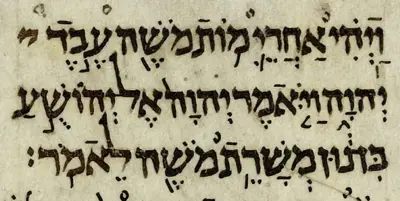
The Book of Isaiah (Hebrew: ספר ישעיהו, [ˈsɛ.fɛr jə.ʃaʕ.ˈjaː.hu]) is the first of the Latter Prophets in the Hebrew Bible and the first of the Major Prophets in the Christian Old Testament. It is identified by a superscription as the words of the 8th-century BCE prophet Isaiah ben Amoz, but there is extensive evidence that much of it was composed during the Babylonian captivity and later. Johann Christoph Döderlein suggested in 1775 that the book contained the works of two prophets separated by more than a century, and Bernhard Duhm originated the view, held as a consensus through most of the 20th century, that the book comprises three separate collections of oracles: Proto-Isaiah (chapters 1–39), containing the words of the 8th-century prophet Isaiah; Deutero-Isaiah (chapters 40–55), the work of an anonymous 6th-century BCE author writing during the Exile; and Trito-Isaiah (chapters 56–66), composed after the return from Exile. Isaiah 1–33 promises judgment and restoration for Judah, Jerusalem and the nations, and chapters 34–66 presume that judgment has been pronounced and restoration follows soon. While virtually no scholars today attribute the entire book, or even most of it, to one person, the book's essential unity has become a focus in more recent research.
