Benazir Bhutto Quotes
We learned at an early age that it was men's interpretation of our religion that restricted women's opportunities, not our religion itself. Islam in fact had been quite progressive toward women from its inception.
Bhutto, Benazir. Daughter of Destiny: An Autobiography. Simon & Schuster, 1989.


Turkey, the only Islamic nation where women have equal rights, made huge developmental and reform strides immediately after Ataturk reformed Turkish society and gave women the vote, freed them from veils and chadors, educated them and gave them equal employment rights. Turkey moved from an impoverished 3rd world nation to a modern industrialized democracy.

Sharie is the Islamic code of law based on the Koran which is so brutal that they would stone a woman to death who had illicit sex or kill someone who wanted to change his religion.
This 12th century observation which appears so obvious has been ignored by the vast majority of Islamic scholars and writers subsequent until modern times, and even then they represent the small reform minority of Islamic thinking.
She herself had been denied admission to the University of Georgia in her home state and she went to the University of Wisconsin where she earned a bachelors and masters degree.

The Prophet of Islam was not as sexist and discriminatory against women as are many of his modern followers. The women voting to which Terabi referred took place over 1000 years before Christians and Jews allowed women to vote. Unfortunately, Islam went from a modern, open, intellectual, tolerant, innovative religion, to just the opposite.

One of the interesting similarities between Islam and Judaism is that there is no intermediary between a person and God. There is no hierarchy of validity of interpretation other than what culturally people tend to want to respect clerics. Different cultural subgroups respect different clerical leaders and in many cases, no leaders at all. The latter is the majority in Judaism but still the minority among Muslims, The Baroness is one of the Islamic Reformers who gives little or no credence or respect to intermediaries especially males.


He is often referred to as The Reformer as he was a modernist. In particular, the told his people that there was no religious obligation is Islam for wearing a veil or a burka. These are just customs. Yet most Muslims still believe that veils and burkas were required by God. The only Koranic statement on the subject simply says that women should dress modestly. Despite his efforts, veils and burkas are still required by most Afghani families and most people think the requirement is religious.

This quotation demonstrates that even in the Iranian Islamic Fundamentalist Theocracy, not all the religious leaders are extremists and anti-human rights. However, Saanei is no longer in the top level of the Iranian government and more extreme fundamentalists have control of the government. But Iran is by no means monolithic.

This is one of the most positive statements about women and women’s rights to emanate from a leader of a Muslim Middle Eastern nation.


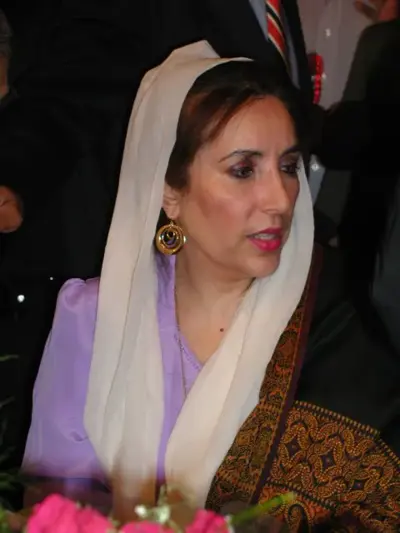
Benazir Bhutto was a Pakistani politician who served as Prime Minister of Pakistan from 1988 to 1990 and again from 1993 to 1996. She was the first woman to head a democratic government in a Muslim majority country. Ideologically a liberal and a secularist, she chaired or co-chaired the Pakistan Peoples Party (PPP) from the early 1980s until her assassination in 2007.
