Annie Besant Quotes
I often think that woman is more free in Islam than in Christianity. Woman is more protected by Islam than by the faith which preaches monogamy. In AI Quran the law about woman is juster and more liberal.
Besant, Annie. The Life and Teachings of Muhammad. Theosophical Publishing House, 1932, p. 25.


This type of religious sexism is not unique to Islam. Fundamentalist Christians place women in a secondary role as do fundamentalist orthodox Jews although both allow a man to take only one wife. The Islamic scripture tells us that the Prophet allowed multiple wives only if the man had the resources to care for the wives and all the children. 4 is the maximum.


This technique she describes is consistent with Sharia—Islamic Law. It however is used by very few women who are sophisticated and courageous enough to do so.

Sharie is the Islamic code of law based on the Koran which is so brutal that they would stone a woman to death who had illicit sex or kill someone who wanted to change his religion.

An immigrant Muslim woman herself, she was very familiar with the physical abuse of a woman in a Muslim household where she may not be the only wife and Islamic law and tradition makes her subservient to the man and allows her to be beaten by him.


One of the interesting similarities between Islam and Judaism is that there is no intermediary between a person and God. There is no hierarchy of validity of interpretation other than what culturally people tend to want to respect clerics. Different cultural subgroups respect different clerical leaders and in many cases, no leaders at all. The latter is the majority in Judaism but still the minority among Muslims, The Baroness is one of the Islamic Reformers who gives little or no credence or respect to intermediaries especially males.


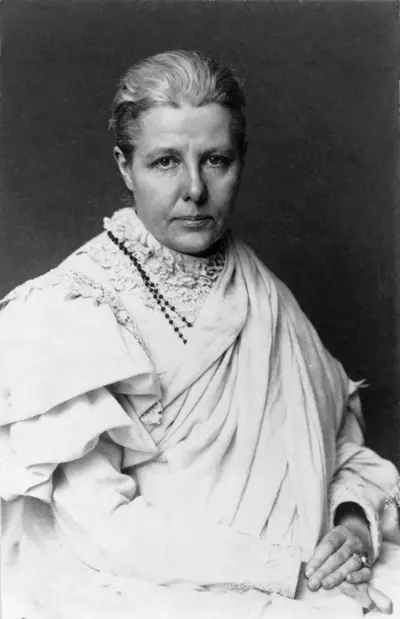
Annie Besant (née Wood; 1 October 1847 – 20 September 1933) was a British socialist, theosophist, freemason, women's rights and Home Rule activist, educationist, and campaigner for Indian nationalism. Regarded as a champion of human freedom, she was an ardent supporter of both Irish and Indian self-rule. She was also a prolific author with over three hundred books and pamphlets to her credit. As an educationist, her contributions included being one of the founders of the Banaras Hindu University. For fifteen years, Besant was a public proponent in England of atheism and scientific materialism. Besant's goal was to provide employment, better living conditions, and proper education for the poor.
