Moshe Dayan Quotes
We could not guard every water pipeline from being blown up and every tree from being uprooted. We could not prevent every murder of a worker in an orchard or a family in their beds.
Dayan, Moshe. Diary of the Sinai Campaign. Harper & Row, 1966, p. 14.


ISIS and other terrorist organizations were using these platforms for propaganda, and recruiting. See {36908}, {36909}, and {36911} for the views of the companies who Carlin claimed were being exploited. See {583142} for the message Carlin believed that was being transmitted.


For years of the Arab-Israeli conflict, Palestinians would never negotiate with Israel over anything. Finally that barrier was broken and, the PLO became a negotiating party with Israel. However, the terrorist organization Hamas, had challenged the PLO for political control of the Palestinians and then took over the Gaza strip—part of the Palestinian territory. They then shot thousands of rockets into Israel, a clear act of war under international law. The Israelis then attacked the Hamas infrastructure and any building of facility where they had command or communications, meetings, trainings or stored weapons or ammunitions. The Gazans suffered many more casualties than the Israelis—about 20 to 1 ratio. Many other countries tried to broker a ceasefire which the Israelis agreed to but Hamas would not. The Israeli ambassador was asked on American television if Israel would be willing to negotiate on the larger issues of the conflict as they had negotiated with the PLO. This was his reply. The major problem was that the Hamas Charter had two clauses that made negotiations impossible. Hamas was committed to the destruction of Israel and would not agree that the Israel had a right to exist. Second, the Hamas charter called for the killing of Jews anywhere in the world—men, women and children. The Israelis asked what they would negotiate about given those two charter items and the Hamas terror history in killing as many Israelis as they could.


The culture of Iraq and the Desert tribes made raiding and looting of other villages or travelers or caravans a way of life. The British occupiers were determined to put an end to it and Harris, a young officer, developed the retaliation of bombing the village of the raiders and their warlords. This appears to be the beginning of destroying of houses in the Middle East as a method of retaliation and punishment which would be adopted so well by the Israelis as a humane method and they often quoted Harris saying: “we put them to the maximum amount of inconvenience, without physical hurt, and they soon stopped their raiding and looting.”


Egypt was miserably governed by the Ottoman Turks. The people had no rights or freedoms and poverty and ignorance was universal. Napoleon, came to Egypt in much the same way as the United States did in Iraq two centuries later—with the assumption that bringing freedom and affluence, modern government, and a greater expectation of standard of living would find favor with most of the downtrodden inhabitants. However, although the Egyptians hated their status quo, it was culturally something they were comfortable with. It was Islamic and not Christian or secular as much of France was. Yet occupation by these foreigners was more onerous culturally than occupation by the Islamic Ottoman Turks.

The Nigerian Government was very slow in making a policy to protect communities against the Boko Haram, fundamentalist Islamic terrorists. The Nigerian army was totally corrupt with no interest in risking their lives, so they would rarely go after the terrorists or interpose themselves between the terrorists and their targets even when they had advance knowledge.


Sudan openly used Islamic terrorists to attack, rape and murder animist and Christian civilians in Darfur. The leaders were wanted for war crimes and openly admitted to many. See {641655}.


The Belgian soldiers attempted to terrorize and intimidate the natives into working on the rubber plantations. The practice of cutting off hands thus leaving the victim to intimidate others which was so prevalent in Sierra Leone and other parts of Africa in 2000 was also practiced by the Whites at the turn of the last century.


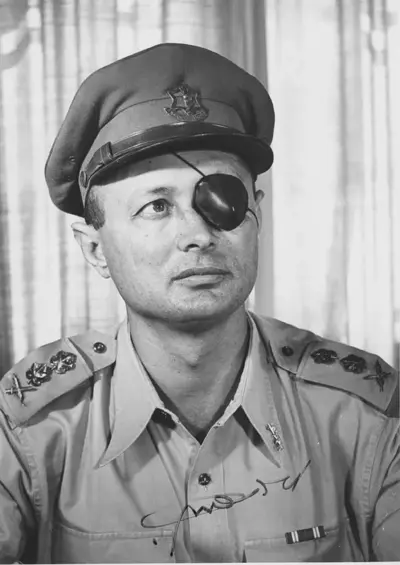
Moshe Dayan was an Israeli military leader and politician. As commander of the Jerusalem front in the 1948 Arab–Israeli War, Chief of Staff of the Israel Defense Forces (1953–1958) during the 1956 Suez Crisis, but mainly as Defense Minister during the Six-Day War in 1967, he became a worldwide fighting symbol of the new state of Israel. In the 1930s, Dayan joined the Haganah, the pre-state Jewish defense force of Mandatory Palestine. He served in the Special Night Squads under Orde Wingate during the Arab revolt in Palestine and later lost an eye in a raid on Vichy forces in Lebanon during World War II. Dayan was close to David Ben-Gurion and joined him in leaving the Mapai party and setting up the Rafi party in 1965 with Shimon Peres. Dayan became Defence Minister just before the 1967 Six-Day War. After the Yom Kippur War of 1973, during which Dayan served as Defense Minister, he was blamed for the lack of preparedness; after some time he resigned. In 1977, following the election of Menachem Begin as Prime Minister, Dayan was expelled from the Labor Party because he joined the Likud-led government as Foreign Minister, playing an important part in negotiating the peace treaty between Egypt and Israel.
