Joseph Warren Quotes
We are happy in having an opportunity of laying our distressed state before the representative body of the continent, and humbly hope you will favor us with your most explicit advice respecting the taking up and exercising the powers of civil government, which we think absolutely necessary for the Salvation of our country and we shall readily submit to such a general plan as you may direct for the colonies, or make it our great study to establish such a form of government here, as shall not only most promote our advantage but the union and interest of all America.
Warren was killed shortly thereafter at the Battle of Bunker Hill.
Joseph Warren, 1741-1775, President, Massachusetts Provincial Congress, Major General of the American Revolution, Letter to the Continental Congress from the Provincial Convention of Massachusetts; June 2, 1775
Sourced by: Eigen's Political and Historical Quotations

This is the first known proposal for the formal union of all the American colonies. There had been a confederation of New England plantations in 1643, see {612159}. The purposes are remarkably similar to what developed in our original constitution and even regarding the Federal role today.

This was written more than a year before the American Revolution Battles began. It took time to ship the men and supplies to America and the British did not handle that task with much efficiency. See {636926} for another of the King’s statements.

The “abrupt departure” referred to the Tories. The phraseology is today almost comical were it not so serious a matter. This first New Hampshire Constitution was a very short one developed quickly out of necessity.


Later, in 1697, William Penn made the first proposal to unite all the American colonies. See {612247}.


The fear of civil war amongst the colonies if they were free from Britain was substantial. There were a number of potential conflict flash points of which slavery was one. See {619100}


Under the treaty between Ireland and England that created the Irish free state, in case of war or other contingency, the Irish Free State was required to allow Great Britain to use specific seaports. However, De Valera hated the English, originally opposed the treaty, and was adamant that the Irish Free State be neutural in WWII. He therefore refused to fulfill the Irish obligation. For Churchill this was the last chance for De Valera to show that the Irish Free State was a real nation with rights and obligations. Interestingly, although De Valera did not want to assist the British fighting the Germans, over 70,000 Irishmen went to England and Volunteered to fight on the British side. There were Irish batallions fighting on the allied side but the Irish Free State was neutural. De Valera made matters worse when he allowed German agents into the Irish Free State to try and go from there to England as well as set up observation posts to guide German bombers attacking the populated city of Belfast and other parts of Northern Ireland. See {639724} for Chirchill’s later reflective commentary on the situation.

The colonists did not have great support from England before the Revolution especially with science and technology were British policy was to keep the colonies dependent on the mother country. As a result many Americans had to be very ingenious in order to function and they invented many clever ways of doing things without the right tools and equipment. Under wartime conditions this served them well.

Howe had written Franklin attempting to stave off a American break with England. Franklin, with the approval of the Continental Congress, replied.

Montgomery was killed later that year commanding the failed attempt to capture Montreal in Canada


Earlier, his father had also castigated the ministers over their inept hard-line handling of the American Revolution. See {641505} .

This is a very interesting quotation. A contemporary historian tells us how rapidly the American colonists organized when Parliament passed the Tea Tax. Even with the Internet and social media it would be hard to organize representation from 13 states that fast today. The word of mouth and mail of the day was surprising to most of us. The passion on the issue and the public interest must have been extraordinary. Ramsay was the first major historian of the American Revolution.
Franklin was also an accomplished political cartoonist.
As he signed the Declaration of Independence John Hancock stated "We must all be unanimous; there must be no pulling different ways; we must all hang together." Franklin replied:
This was the first proposal for a united American government. It provided for a “President-General” and a unicameral “Grand Council” with representation proportional to population.
1st Earl of Chatham. The speech was given in the midst of the American Revolution.
The American plan was to capture Quebec and add that province to the 13 colonies. See {636940} . However, the American officers botched the invasion and did not attack as soon as they arrived when the British had almost no troops to defend Quebec.
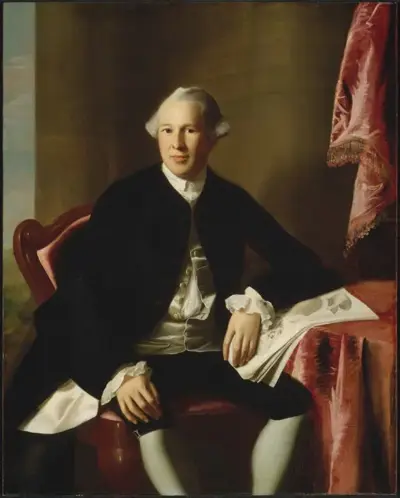
Joseph Warren was an American physician who played a leading role in Patriot organizations in Boston during the early days of the American Revolution, eventually serving as President of the revolutionary Massachusetts Provincial Congress. Warren enlisted Paul Revere and William Dawes on April 18, 1775, to leave Boston and spread the alarm that the British garrison in Boston was setting out to raid the town of Concord and arrest rebel leaders John Hancock and Samuel Adams. Warren participated in the Battles of Lexington and Concord the following day, which are commonly considered to be the opening engagements of the American Revolutionary War.
