Winston Churchill Quotes
We are asking the nations of Europe between whom rivers of blood have flowed, to forget the feuds of a thousand years.
Winston Churchill, 1874-1965, British Prime Minister (Conservative), Speech, February 14, 1948
Sourced by: Eigen's Political and Historical Quotations

She had gone to Europe where the 2nd World War was raging.


Jaroslav Volodymyrovyč ‘Mudryj

In his younger days Jinnah was considered one of the greatest of the Indian Politicians in the Congress Party and all of India. Even though he was a Muslim, his leadership and political philosophy was appreciated by educated and politically active Indians of all faiths and casts. He was also so considered by the English Viceroy and his staff and noted by the politicians in England as a man who could bring Indians together without regard for religious or socio-economic status. He underwent a number of personal tragedies and changed radically until he was not only a sectarian Muslim leader but threatened and facilitated Islamic terrorism against all the other religions. Jinnah's flip flop on this point led to one of the great massacres and tragedies in human history" The Nightingale of India

While this was a common attitude for years before, the horrors of World War II produced a general revulsion to war and an awareness that war between two nations spills over to other states in the region and in an era of globalization, effects countries in other parts of the world. So there has been a tendency to use diplomacy endlessly, even after "things have gone too far". Historically, when things reached that point, the parties did fight it out, and when one was weakened sufficiently, negotiations and diplomacy could then be fruitful.

It is not our business to collect trophies but to try … [to] bring back the world to peaceful habits
Many in England and the other allies wanted to punish France for their aggression under Napoleon by barring France from the Concert of Europe—an informal institution of the major powers of Europe. Castlereagh’s view prevailed and France was included.


There were many who believed that a thriving growth economy depended in part on wartime military spending levels. The issue is still controversial.

Conservative hard liner hawks in both countries wanted a much more contentious and hostile relationship between the two nations. Reagan especially had to cope with a significant base of his Republican support. In any attempted peace or disarmament negotiations, there are people in both nations who profit economically, politically or ideologically from continued strife. This always makes the process difficult.


Starting with the Crusades, the Popes began giving indulgences to those who would die in battle fighting for a holy cause. The Papacy was then at one of it’s lowest points. Two men, Clement and Urban, both claimed the Papacy and each had raised an army to fight the other. Each was promising indulgences to those who would fight, and in a modality similar to the Muslim terrorists of the 21st century, the soldiers were promised ascendancy to Heaven if the fell in battle for such a holy cause. Wycliffe, in a wonderfully original notion, proposed that the people who live in peace be granted the indulgences. See {618086}.


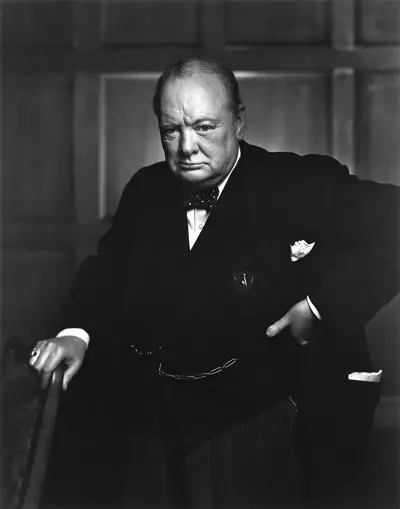
Sir Winston Leonard Spencer Churchill, KG, OM, CH, TD, DL, FRS, RA was the Prime Minister of the United Kingdom from 1940 to 1945, during the Second World War, and again from 1951 to 1955. Apart from two years between 1922 and 1924, Churchill was a Member of Parliament (MP) from 1900 to 1964 and represented a total of five constituencies. Ideologically an economic liberal and imperialist, he was for most of his career a member of the Conservative Party, as leader from 1940 to 1955. He was a member of the Liberal Party from 1904 to 1924. Churchill was also well known for his military career and as a historian, painter and writer, and among his many awards was the Nobel Prize in Literature.
