Mahatma Gandhi Quotes
War is an unmitigated evil. But it certainly does one good thing. It drives away fear and brings bravery to the surface.
Gandhi, Mahatma. Harijan, 21 Sept. 1940, p. 285.


Nearly two years after Tripoli had declared war against the United States, the U.S., after much deliberation, decided to stop negotiating a tribute settlement with Tripoli. The U.S. launched their attack on June 11, 1803 in what would be the first amphibious operation on the Barbary Coast. After witnessing the operation, the Pasha was unmoved. Piracy and war was a way of life for the Barbary states.

Attila the Hun. The Romans aided by Theodoric, King of the Visigoths, fought the Huns in the only battle that Attila ever lost which he lost badly. There were 165,000 men killed in an afternoon. The Roman General, Flavius Aetius, had been a boyhood friend of Attila’s and had fought with him against the Visigoths. The Romans had Attila trapped but his old friend let him escape with just a good thrashing to his ego and army as to not upset the balance of power and tilt it in favor of the Goths. Roman foreign policy at the time was to keep all the Barbarians strong enough to fight one another so that none would be dominant but all weaker than Rome. Divide and conquer.


Patton, one of the world’s best fighting general was somewhat mentally unbalanced and unlike almost all senior officers who are successful commanders but see war as an unpleasant, brutal necessity, Patton loved war and the fighting part of it. His non battlefield behavior was so erratic and atrocious that Eisenhower and his other superiors almost fired him on several occasions. He died in an automobile crash shortly after the German surrender, so the dilemma of what to do with Patton in peacetime was resolved.
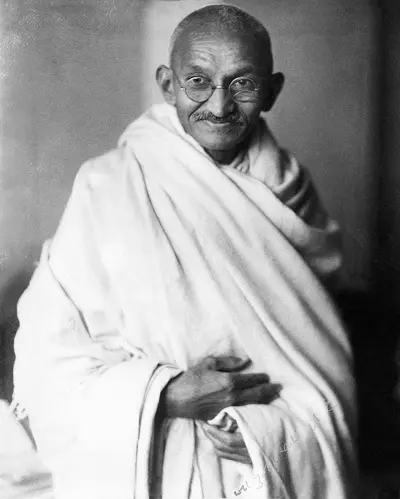
Mohandas Karamchand Gandhi was an Indian lawyer, anti-colonial nationalist, and political ethicist, who employed nonviolent resistance to lead the successful campaign for India's independence from British rule, and in turn inspired movements for civil rights and freedom across the world. The honorific Mahātmā (Sanskrit: "great-souled", "venerable"), first applied to him in 1914 in South Africa, is now used throughout the world.
