George Orwell Quotes
To walk through the ruined cities of Germany is to feel an actual doubt about the continuity of civilization.
Orwell, George. "Revenge is Sour." Tribune, 9 Nov. 1945, p. 11.


Although the Yugoslav casualties were horrific, they inflicted great casualties on the Germans who lost more men fighting the Yugoslavs than they lost to any other of the allies except the Russians.

DPs were “displaced persons” -- the euphemism for people who were no longer welcome in their country of birth. Congress, made up mostly of immigrants or the children of immigrants who were poor and downtrodden, were not enthusiastic about the United States absorbing many of the world’s DPs resulting from WWII.
At Potsdam the Allies had called for the unconditional surrender of the Japanese and reiterated what had been allied policy that the surrender must be unconditional. Even after the Hiroshima bombing, the Japanese military cabinet voted not to surrender. After the second atomic bomb, the Emperor decided to surrender, but even then there was an attempted military coup to prevent that. Fortunately, the coup failed. We did not have any more atomic bombs immediately ready and it would have taken months to construct more.


This is a significant quotation because the bombing of Hamburg was somewhat controversial. The Germans had bombed Warsaw, London and many other cities contravening the them accepted laws of war. The allies retaliated by bombing German cities where there was extensive war manufacturing; however, there were some allied war planners who saw the bombing of German cities as a way of breaking morale and shortening the war above and beyond the damage to the factories. A new technique had been used in bombing Hamburg—firebombing. Many thousand coordinated incendiary bombs ignited fires throughout the city which combined into a huge firestorm, killing even people with heat that were in air raid shelters. More than 100,000 Germans died—a greater toll than would later take place at Hiroshima and Nagasaki. There was some allied criticism that the firebombing just killed people but made the survivors even more adamant about continuing the fight, This quotation, from a leading German officer, supported the view that there was a strong positive military effect. The technique was repeated in Tokyo to even greater effect before the atomic bombed were ready. (The Japanese had also bombed civilian cities first as well as committed other atrocities.


At first reading, this is just a common report of a German war correspondent riding along on a bombing mission. However what makes it a very important historical quotation is the description of the fires and the date. In WWII the allies firebombed Hamburg {624722} and Dresden, and were then accused by the Germans—and by some historical revisionists in the 21st century—of bombing civilian cities and using the firbombing technique where one huge conflagrant sucked the air out of the area and roasted even people in bomb shelters. However, it was clear that the Germans had started the bombing of civilian cities, but the firebombing was less clear. This quotation proves that it was the Germans who first broke the rules of war and that made the subsequent Allied use of the technique legal and for most people then moral.


He was warning the majority and blaming them for what was to happen. Ironically, at the end of the First World War, Germany was so harshly treated because the allies felt that the Germans had been aforewarned not only by others but by opposition Germans as well.
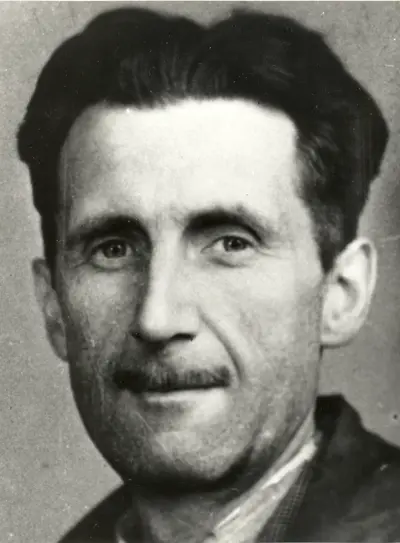
Eric Arthur Blair, known by his pen name George Orwell, was an English novelist, essayist, journalist and critic. His work is characterised by lucid prose, biting social criticism, opposition to totalitarianism, and outspoken support of democratic socialism.
