Jean Domat Quotes
This obedience to him who governs should be considered as obedience to the power of God Himself, Who has instituted [the prince] as His lieutenant ....
He was stating for France what the English King James I had said a few decades earlier. See {616307}.
Jean Domat, 1625-1696, French Jurist, On Social Order and Absolute Monarchy
Sourced by: Eigen's Political and Historical Quotations

This is one of the passages of the Bible that Christian Kings cited in expecting obedience. Most of the monarchs took this passage to mean that God had selected and appointed them to rule.


Joseph ben Matthias. There a different kinds of theocracy, There can be a Pope, a King, or a Supreme Leader who acts as the chief magistrate using a religious tract as the law of the land. The Ancient Jews had a Republican Theocracy were the leaders were chosen by the people but they did not promulgate any laws. The Torah—the first 5 books of the Old Testament—was the law of the land. In comparison. 21st century Iran recognized the Koran as the source of Laws. However, their chief magistrate was a cleric—the supreme leader who is not elected but appointed by a few other clerics. None of the other Iranian leaders are chosen by the people because all candidates must be approved by the Supreme Leader in order to even stand for election. So the ancient Jews had a republican theocracy, while Iran was an autocratic theocracy.

Bartolomeo Fiadóni -- Tolomeo da Lucca -- Bartholomew of Lucca

The political control technique of establishing a religion where by God himself ordains the ruler was not unique to the Christians and Muslims. The technique was also used in the Inca Empire of Peru. The first Inca who came up with this creative theocratic concept did so in about 1200.


Sometimes referred to as Gaspar de Toledo. This quotation Illustrates one of the ways that Churches maintained power over the secular government even though they were supposedly separate. By maintaining control over the secular leaders consciences and sense of morality, the Church could control the secular government. In this particular historical case, there was not even a supposed separation. The Confessor had an ex officio role in the high council. See {629457}.


This quotation illustrates the negative attitudes towards democracy that existed with many “leaders” of the time. Stuyvesant was appointed by and reported to the Dutch West India Company—not to the government of Holland. New Amsterdam was a commercial venture just as most of the English American Colonies were. Stuyvesant was not a particularly good governor in terms of both making money for the company or governing the new city.

This was written as advice to his son, Prince Henry.


This notice of Excommunication was promulgated to the Catholic clergy in Ireland in May of 1538. It required all Roman Catholic leaders to size the property of Protestants or Catholics who sympathized with them. Those who did were then regarded as traitors by the Protestant King. The anti-Protestant feeling culminated with the massacre of about 100 Protestants who were drowned in Bann a few years later.
The early human idea that human rulers must somehow divine and/or designated and supported by the deity was present over many cultures and geographies.
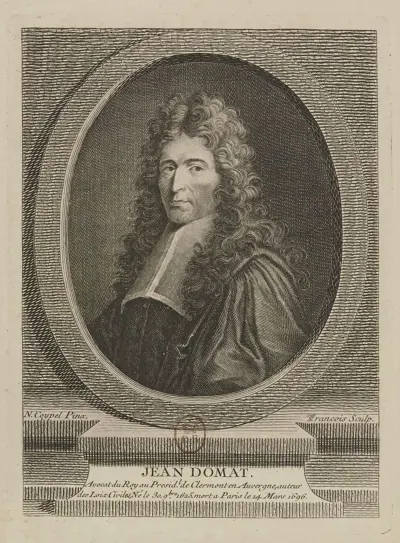
- Born: November 30, 1625
- Died: March 14, 1696
- Nationality: French
- Profession: Jurist
