Book of Romans Quotes
Let every person be obedient to the governing authorities; for there is no authority except from God, and those authorities that exist have been instituted by God. Therefore whoever resists the authorities resists what God has appointed, and those who resist will incur judgment. ... the authority does not bear the sword in vain! It is the servant of God to execute wrath on the wrongdoer
This is one of the passages of the Bible that Christian Kings cited in expecting obedience. Most of the monarchs took this passage to mean that God had selected and appointed them to rule.
New Testament, Romans 13:1
Sourced by: Eigen's Political and Historical Quotations

He was stating for France what the English King James I had said a few decades earlier. See {616307}.

The Confession was a statement of doctrine to which the Swiss Anabaptists adopted.

Yazid ibn al-Walid ibn 'Abd al-Malik. This is an Islamic doctrine that operates to this day together with the stricture that a bad ruler must be endured and not revolted against UNLESS he does not follow his Islamic religious obligations. This is why many Islamic rulers curry favor with the clerics. As long as they do not claim he is violating the word of God, his rule is safe from revolution. However, if the clerics turn on him, he is in deep trouble. Thus Saudi Arabia endures a monarchy and the ruling family pays the Wahhabi enormous sums to avoid their religious condemnation.


This Biblical quotation has been used for more than a thousand years by Christian authorities, civil and religious, to induce obedience to the existing authority and suppress revolution.

Constantine the Great. This is one of Constantine’s major defenses of his decision to adopt Christianity. Scholars today still argue as to what part practical politics played in Constantine’s conversion and what part was his personal religious conversion.

Sometimes referred to as Gaspar de Toledo. This quotation Illustrates one of the ways that Churches maintained power over the secular government even though they were supposedly separate. By maintaining control over the secular leaders consciences and sense of morality, the Church could control the secular government. In this particular historical case, there was not even a supposed separation. The Confessor had an ex officio role in the high council. See {629457}.

Bartolomeo Fiadóni -- Tolomeo da Lucca -- Bartholomew of Lucca

During the American Revolution many patriot clerics argued against the monarchy by claiming that God has given Kings to the Ancient Jews—who had a type of Republic—as a punishment. Therefore monarchy is to be avoided.

This was a practical argument to justify government paying for religious education.


Ivan the Terrible. He was referring to himself as God’s Chosen One. He and the Church were aligned against the Nobles, whose lands Ivan wanted. He would execute hundreds of “traitors” every month. He even executed the families of his enemies in very cruel ways. He claimed to be “cleansing” the land of sinners in preparation for the coming judgment day, and the church backed him up on this. The Church gave him carte blanche to “punish” all sinners and his paranoia eventually got around to the church fathers themselves who became the final victims.
Sins punishable by death included blasphemy, seditious language, scolding one's parents, adultery, lewd conduct, backbiting, spreading scandal, and even complaining. Persons of marriageable age were ordered to marry; unmarried women had to accept the first man to ask them.
The political control technique of establishing a religion where by God himself ordains the ruler was not unique to the Christians and Muslims. The technique was also used in the Inca Empire of Peru. The first Inca who came up with this creative theocratic concept did so in about 1200.
“Small” in this case refers to the quality of the grinding of the mill. The smaller the grains the better the milling. So the proverb says that although slow, it is very effective.

People of this era not only saw epidemics as the wrath of God, but also saw military catastrophe, invasion and raids as a punishment of God for the sins of the people of the area.


This quotation illustrates the negative attitudes towards democracy that existed with many “leaders” of the time. Stuyvesant was appointed by and reported to the Dutch West India Company—not to the government of Holland. New Amsterdam was a commercial venture just as most of the English American Colonies were. Stuyvesant was not a particularly good governor in terms of both making money for the company or governing the new city.

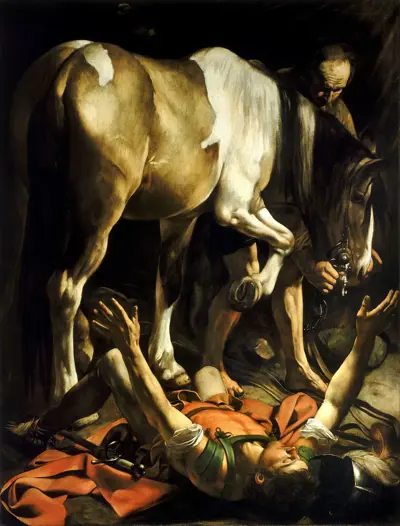
The Epistle to the Romans or Letter to the Romans, often shortened to Romans, is the sixth book in the New Testament. Biblical scholars agree that it was composed by Paul the Apostle to explain that salvation is offered through the gospel of Jesus Christ. It is the longest of the Pauline epistles.
