John Leland Quotes
This article would read much better in a catechism than in a state constitution, and sound more concordant in a pulpit than in a statehouse.
In 1780 the Massachusetts legislature passed a constitution, the 2nd article of which required all men to publicly worship: See {606670} Pen name: Jack Nipps
John Leland, 1754-1841, Baptist Minister and Author, The Yankee Spy, 1794
Sourced by: Eigen's Political and Historical Quotations

See John Leland for opposition to this clause: {608955}


It was drafted by John Adams. Note that there was freedom of religion for Christians and not others. Of all the colonies, Massachusetts had the worst record of religious intolerance with Puritans controlling everything. Rhode Island and Connecticut were created by religious dissenters from Massachusetts. Adams had all he could do to get the Christian sects on an equal footing ratified. The other colonies however, insisted to a total freedom of religion clause which became the First Amendment to the national Constitution. Adams himself was a kind of secular, cultural Christian who did not believe in the divinity of Christ and other Christian doctrine. See {592695} to illustrate this.


Carroll was writing to Troy during the time of the question of Catholic emancipation in England. Here he is clearly alluding to the British form of government. Carroll never missed the opportunity to champion religious freedom as manifested in the U.S. Constitution. For an earlier example of his praise for religious freedom, see {596933}.

The Senate was presented with James Madison’s Language for the First Amendment. These three alternatives were proposed and rejected. The rejected versions turn out to have been very important. Some have argued that the First Amendment does not prohibit Congress making laws regarding religion as long as it doesn’t favor one religion over another—for example pay for clerics of all religions. However, that was the third proposal and it was rejected in favor of the high wall of separation proposed by Madison.

By the beginning of the 21st Century, some Republicans had perfected the art of naming legislation completely contrary to its intent and effect in order to make opposition to it more difficult for opponents in the legislature. But nothing they ever did came close to the audacity of naming this legislation, The Toleration Act, as it was about the most intolerant legislation ever passed in America. Exactly what the motivation of the legislative drafters was is not known. One theory is that as a Catholic Colony, perhaps they really thought that they were being tolerant as they would not execute Protestants except Unitarians. In any event is was a low point in American history and was one of the examples that was before the Founding Fathers when they added the First Amendment to the Constitution. See {624142} for the text.

In that era the favoritism of the government—especially state and local government—in favor of the of the Protestant Christians. Politicians started challenging the clear unconstitutional favoritism. The reformers were Republicans often referred to by the Democrats as “Godless Republicans”. A century later the Republicans would oppose strict separation of church and state with the Southerners and Fundamentalist Christians in their party and the Democrats fighting to maintain strict separation of church and state.


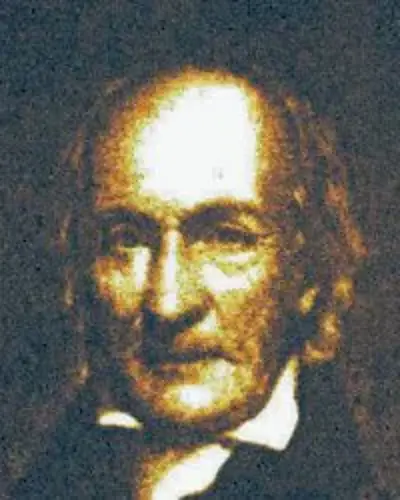
- Born: May 14, 1754
- Died: January 14, 1841
- Nationality: American
- Profession: Baptist Minister
John Leland was an American Baptist minister who preached in Massachusetts and Virginia, as well as an outspoken abolitionist. He was an important figure in the struggle for religious liberty in the United States. Leland also later opposed the rise of missionary societies among Baptists.
