Joseph J. Ellis Quotes
There were more Americans in the British Army during the Revolution than there were in the American Army.
Joseph J. Ellis, Historian, C-SPAN, Founding Fathers & The American Revolution, National Archives, September 12, 2004
Sourced by: Eigen's Political and Historical Quotations


Americans were by no means united in wanting to take up arms against Britain. Relatively few of the loyalist quotations have come down to us, but here is one. It also illustrates why some Americans wanted complete independence: So that they could escape their debts to English merchants. Most however had more noble and unselfish motives. As a matter of fact, the American Revolution is unusual in the sense that there were so many men of substance who sacrificed much of their material wealth for the American ideal. There were also the rogues and opportunists as Galloway describes.

The crackdown on Boston which was intended to set an example and intimidate all of the other colonies backfired, and the British were told about it by their own officials in America. But they were so rigid and ideological about monarchy, that the stimulated rebellion rather than suppress them.

during and after the American Revolution


This was written more than a year before the American Revolution Battles began. It took time to ship the men and supplies to America and the British did not handle that task with much efficiency. See {636926} for another of the King’s statements.


At the time of the American Revolution there were strong abolitionist forces working against slaver and the slave trade. Southern American slave-owners, the political leadership of the South, feared that England would force slavery reforms on their colonies. Hence, severance from England eliminated that threat. In retrospect, they were quite right for it was England which outlawed the slave trade and led the worldwide anti-slavery movement which had little effect on the new independent America and the political bias in favor of the south of the American compact caused slavery to survive in America, long after the vast majority of the population would have it ended. It took the Civil War to do it.


John Adams, 2nd President of the U.S.


The “abrupt departure” referred to the Tories. The phraseology is today almost comical were it not so serious a matter. This first New Hampshire Constitution was a very short one developed quickly out of necessity.

The treaty ending the Revolutionary war guaranteed that the English bankers and merchants who had debts going back to before the American Revo
lution would have “no impediment” in collecting their debts in America. However, Rhode Island and Virginia in particular placed many impediments and made it virtually impossible for debts to be collected in their states. The John Jay led Supreme Court, in particular, overturned state actions on the grounds that they had implemented Patrick Henry’s sentiment and hence violated the treaty.


The simplistic view that the American colonists were patriots and the British were the colonizers against whom the colonists revolted is not really accurate. The American colonists were polarized into patriots and loyalists. The Loyalist Americans ranged from many of those merchants whose business depended upon England, those whose family were still in England, those whose religion made them loyal to the Church of England, slaves who would be free under British law, Americans who had strong cultural and intellectual ties to England and those Americans who were great believers in monarchy and whose honor required that they fulfill the oath that they had taken to the King of England. Some of the worst atrocities of the American Revolution occurred in the battles of these Americans against each other. See {82105} for more on this point.

2nd Earl of Guilford. This bill cut off all trade with the American Colonies. It was meant as pressure to cease the rebellion. It did not work.


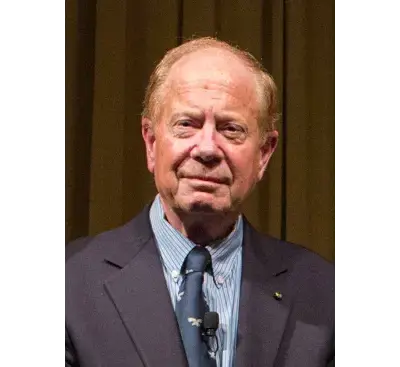
Joseph John Ellis is an American historian whose work focuses on the lives and times of the founders of the United States of America. American Sphinx: The Character of Thomas Jefferson won a National Book Award and Founding Brothers: The Revolutionary Generation won the 2001 Pulitzer Prize for History. Both these books were bestsellers.
