Thomas Hobbes Quotes
There is scarce any Principle, neither in the worship of God, nor humane sciences, from whence there may not spring dissentions, discords, reproaches, and by degrees war it self
Thomas Hobbes, 1588-1679, English Political Philosopher, Philosophicall Elements of a true Citizen
Sourced by: Eigen's Political and Historical Quotations


A force of 4,000 Spaniards, aided by Irish Catholics attempted to thwart the English Protestant Reformation forces in Ireland. They were defeated in their war by Lord Mountjoy. This is one of the many wars in history that was described as “holy” by one or both of its participants.


The debate had come to an impasse over the issue of voting and taxation by state equally or proportional to the population. Witherspoon warned of the consequence of there being no agreement on some form of unity.


The following year India was partitioned and millions of Hindus were slaughtered by Muslims and vice-a-versa.

This quotation illustrates degree of hatred that the French had for the English for the hundreds of years of their European superpower rivalry.


The Papacy was at one of it’s lowest points. Two men, Clement and Urban, both claimed the Papacy and each had raised an army to fight the other. Each was promising indulgences to those who would fight, and in a modality similar to the Muslim terrorists of the 21st century, the soldiers were promised ascendancy to Heaven if they fell in battle for such a holy cause. The armies of the popes marched under the cross as their banner, and Wycliffe found that obscene and actually wrote a treatise saying so. See {618087}.
Shahin’s empire which he conquered for Khosrow II comprised all of the Middle East into parts of India. The Byzantine Roman Empire controlled everything from Constantinople to the West. They were the two “superpowers” of the day. Shahin was attacking various Byzantine holdings outside of the city of Constantinople. Even before Islam, religion was a major conflict between East and West.


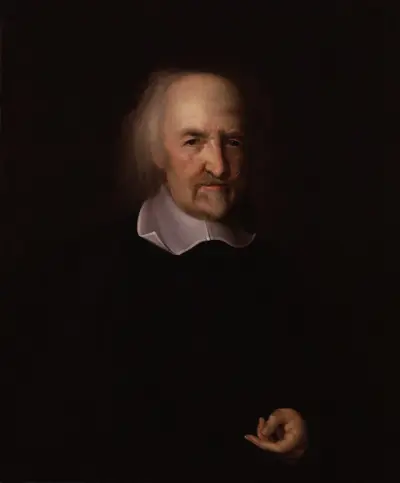
Thomas Hobbes was an English philosopher, considered to be one of the founders of modern political philosophy. Hobbes is best known for his 1651 book Leviathan, in which he expounds an influential formulation of social contract theory. In addition to political philosophy, Hobbes contributed to a diverse array of other fields, including history, jurisprudence, geometry, the physics of gases, theology, and ethics, as well as philosophy in general.
