Thomas Arnold Quotes
There is first the great question between direct taxation and loans. Shall we lay the whole burden of the contest upon the present generation, or divide it between ourselves and posterity ? By an almost universal law of our nature, money lightly gained is lightly spent: a revenue raised at the expense of posterity is sure to be squandered waste fully. Waste, as usual, begetting want, the sums raised by loans will commonly be large. Now these large sums are a mortgage on all the property, on all the industry, on all the skill and ability of a country for ever.
Thomas Arnold, 1795–1842, English Professor of Modern History, Oxford University, Protestant Minister & Reformer of the Anglican Church, Introductory Lectures on Modern History, Oxford University, December 1841
Sourced by: Eigen's Political and Historical Quotations


This is an excellent historical quotations showing how our government financed the Spanish American War. Wars have always placed economic stress on the nations which wage then. In the American Revolution we borrowed from individuals and from France. After that all our wars were financed by a combination of war bond sales, other borrowing, and tax increases—all except the George W, Bush Afghanistan and Iraq Wars which were not funded thus complicating an economic crises caused by Bush’s Great Recession. While some critics saw Bush’s actions as reprehensible and irresponsible—it was the only time in American history where tax rates were cut in wartime, Bush’s team had a plan. They had an ideological point of view that said that major tax cuts would spur the economy and lead to MORE government revenue as a result of the growth that would come. However, in this case there not only was no growth, but there was the worst recession in American History. But there was a plan to finance the war—it just went awry.


Almost every major corporation that is growing must borrow money to finance the growth. There is a great temptation to do this continuously, as if all works out the borrowed money is paid back and the nation has grown. However, not every investment succeeds, and when they do, few nations will take the growth and save it for a future date when a national investment does not work out as well as hoped. Gradually national debt as a proportion of the economy gets larger and larger and it makes mew investments more and more difficult to succeed because of the higher rates of interest that must be paid. Every modern country must find a balance. Those that do not can have a financial disaster such as Greece in the early part of the 21st century.


Although the Professor was often right about this technique, at the time he made this statement, the Clinton administration was actually cutting spending and using much of the revenue to pay for the deficit—just the opposite of what the Professor was worried about. It was successful and the deficit was eliminated and surpluses were projected. However the succeeding administration more closely followed the professor’s pattern and increased spending enormously for serious needs, but also cut taxes, so that we went during the Bush administration from the largest projected surplus in American history to the greatest deficit in American history.


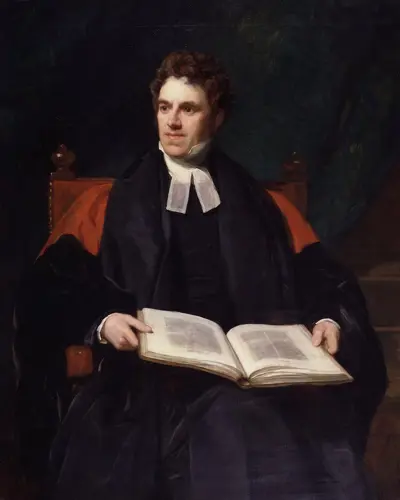
Thomas Arnold was an English educator and historian. Arnold was an early supporter of the Broad Church Anglican movement. He was the headmaster of Rugby School from 1828 to 1841, where he introduced a number of reforms that were widely copied by other prestigious public schools. His reforms redefined standards of masculinity and achievement.
